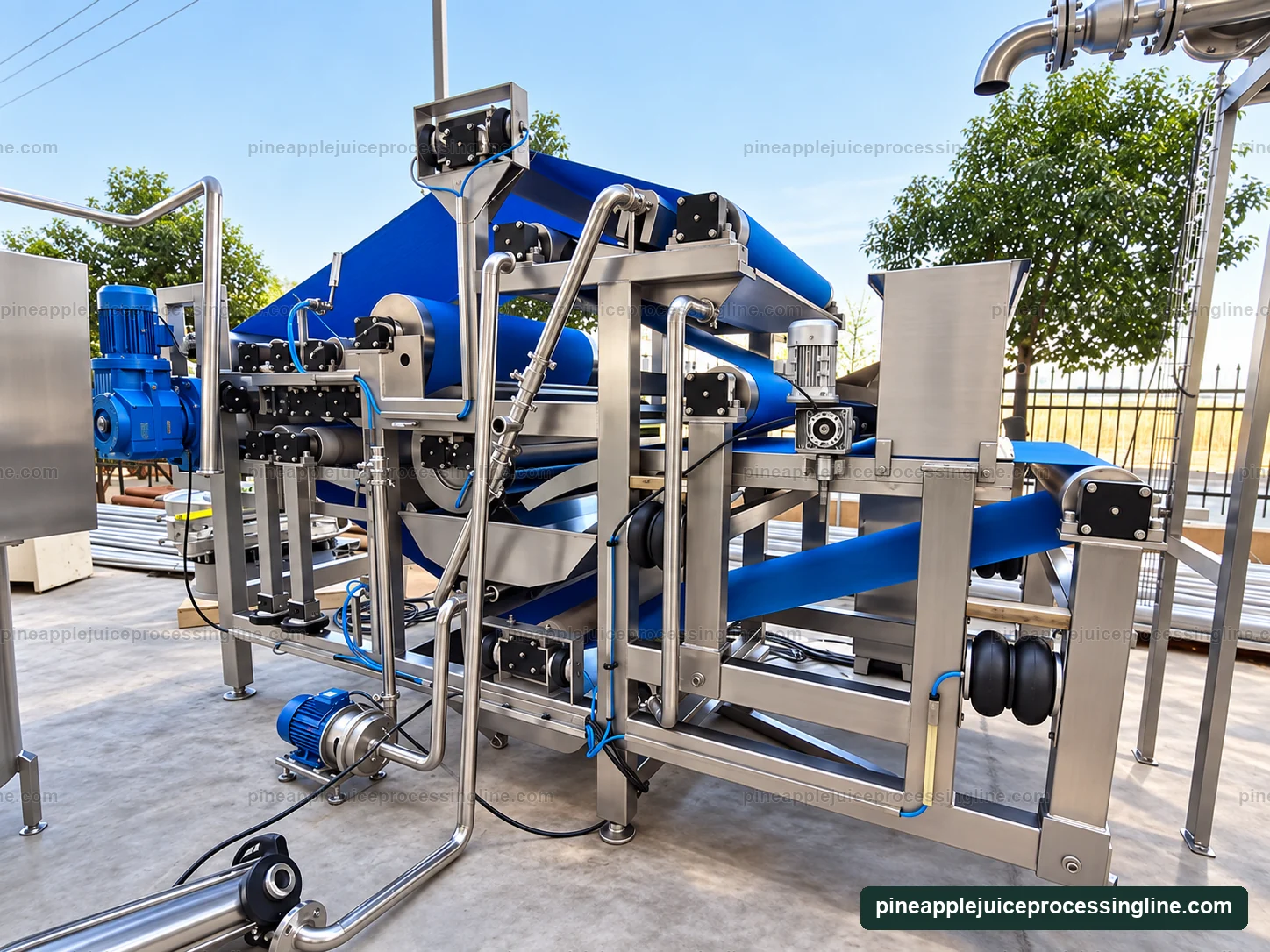
Brushes, conveyors and press belts need direct access
The front end accumulates soil, fragments and fibrous material around brush beds, conveyor rails, transfer points and drains. Removing visible material and reaching the underside of working surfaces are separate tasks from spraying the top of a belt. Collection pans and drains must not retain the removed residue beside exposed product.
On the press, inspect the working belt, rollers, cake-discharge area and juice collection path. Cleaning follows the installed belt and nozzle arrangement, with safe access to areas that require manual attention. Stop and isolate machinery before opening guards or removing trapped material; the production drive is not a cleaning-access aid.
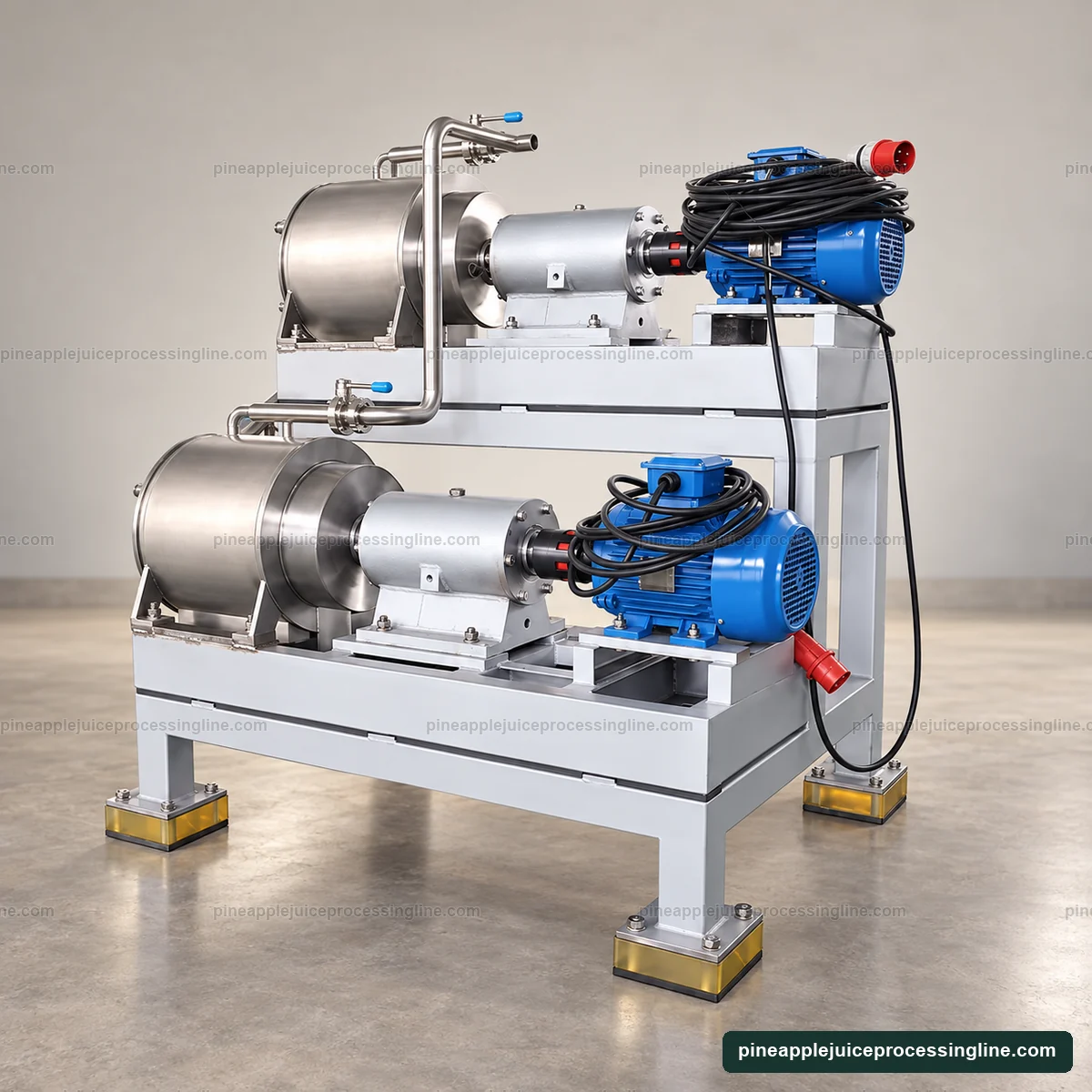
Remove, inspect and correctly refit working parts
Crusher and finisher access covers provide access to working components. Fibres lodged at screens, seals and discharge points need removal according to the machine procedure. The inspection checks screen condition, seating, cover closure and the product path before reassembly.
A damaged or incorrectly seated screen can change the product separation even when the motor runs normally. The two-stage finisher has two working stages within one assembly, so cleaning access and checks must cover both. Sufficient removal clearance belongs in the installed layout.
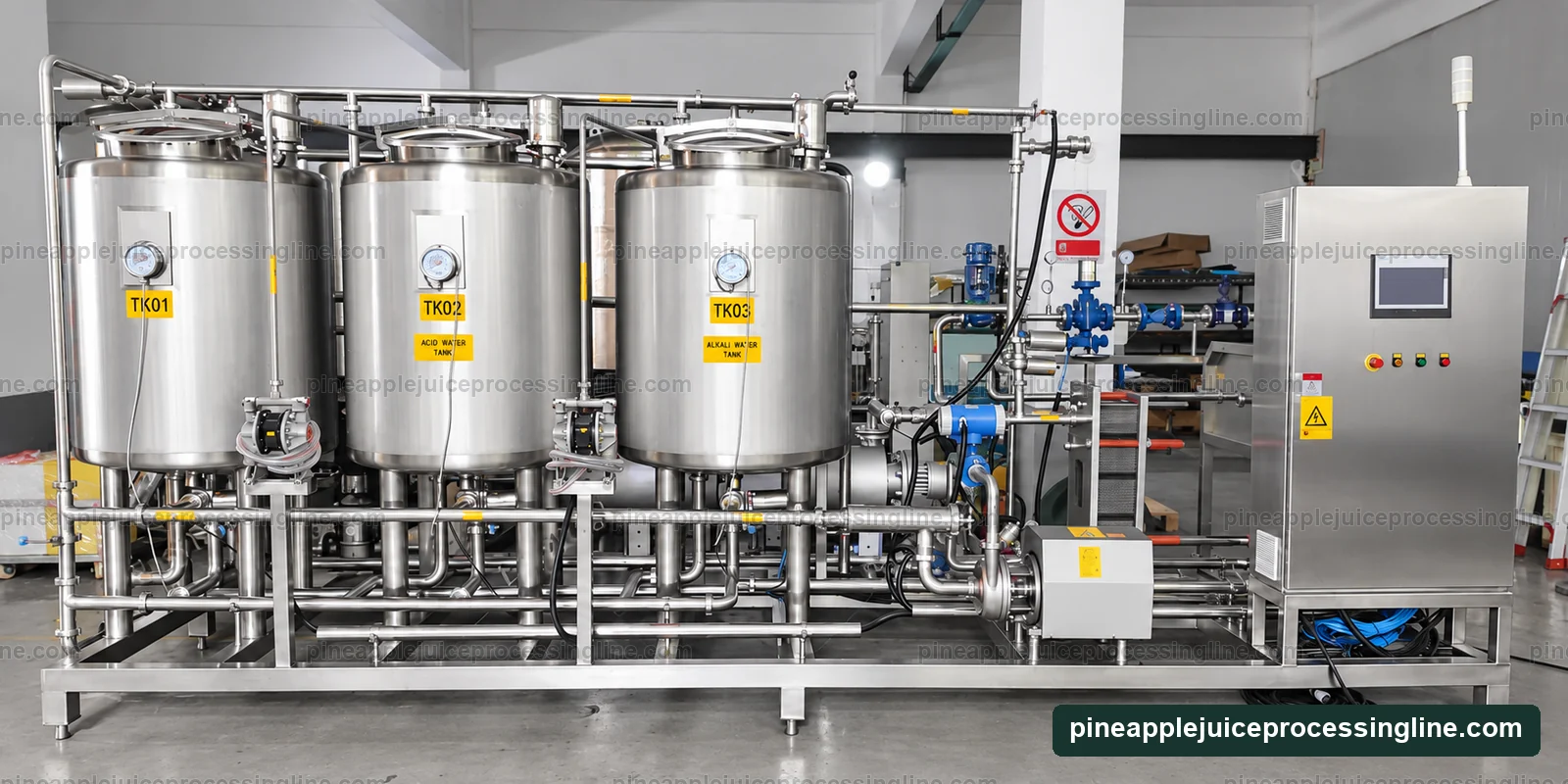
A closed cleaning circuit needs a complete return path
A CIP station combines cleaning vessels, pumps and selected heating and valve arrangements to circulate cleaning media through compatible equipment. The circuit includes its supply, the product-contact surfaces to be reached, and a return or discharge route. Tanks, pipework and thermal circuits may require different cleaning paths and operating conditions.
Flow, chemical conditions, temperature and time are established for the equipment, soil and cleaning procedure. Drainability and the avoidance of trapped product matter between stages. The cleaning plan includes monitoring, rinse endpoints and inspection or verification appropriate to the installed system; a CIP connection alone does not demonstrate cleaning effectiveness.
Membranes and aseptic equipment keep their own limits
Tubular membranes have limits for cleaning chemistry, temperature and pressure that follow the selected membrane and module. A general fruit-line CIP cycle should not be imposed on them without checking compatibility. Retained solids and any filter aid also need controlled removal outside the clean product route.
Cleaning and sterilising an aseptic product path are different operations. The thermal and filling system has a defined procedure for preparing and maintaining its sterile condition, including the relevant interfaces. Open preparation machinery and an ordinary buffer tank do not become aseptic because the line ends in a bag filler.
Use the restart check to protect the next run
The production schedule includes time for these tasks and for inspecting wear components. A peak machine capacity that leaves no usable cleaning or maintenance window is not the sustained output of the installed line.
- Working parts are refitted, access covers closed and guards in place.
- The intended product route is connected, with drains and cleaning returns in the required state.
- Rinse completion and the applicable cleaning checks are recorded.
- Juice receiving and pomace handling are ready before fruit feed begins.
- Equipment-specific thermal, membrane or aseptic start-up procedures are completed where required.