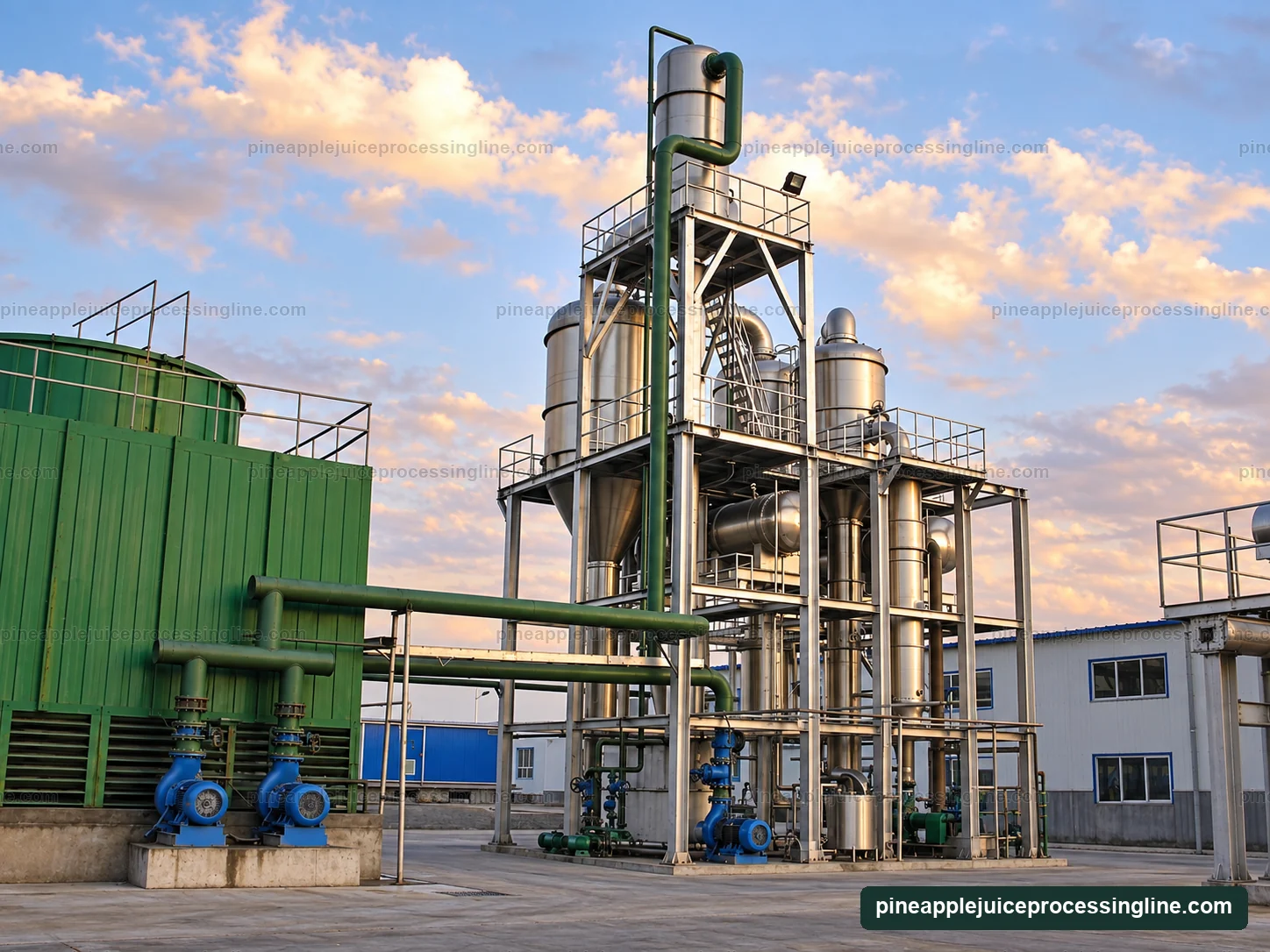
Stabilise the feed before it enters the evaporator
Incoming juice is received into a suitable buffer and delivered at a controlled rate. Coarse fibre, variable pulp loading and air entrainment affect more than appearance: they change pumping, heat transfer, liquid distribution and the cleaning load. The finishing stage therefore belongs in the evaporator feed design.
Screen finishing and fine clarification are different options. A cloudy concentrate route can retain an agreed pulp fraction; a clear concentrate route needs its own clarification specification and a way to manage the retained material. Adding a membrane step to every concentrate line would change both the product and the operating balance.
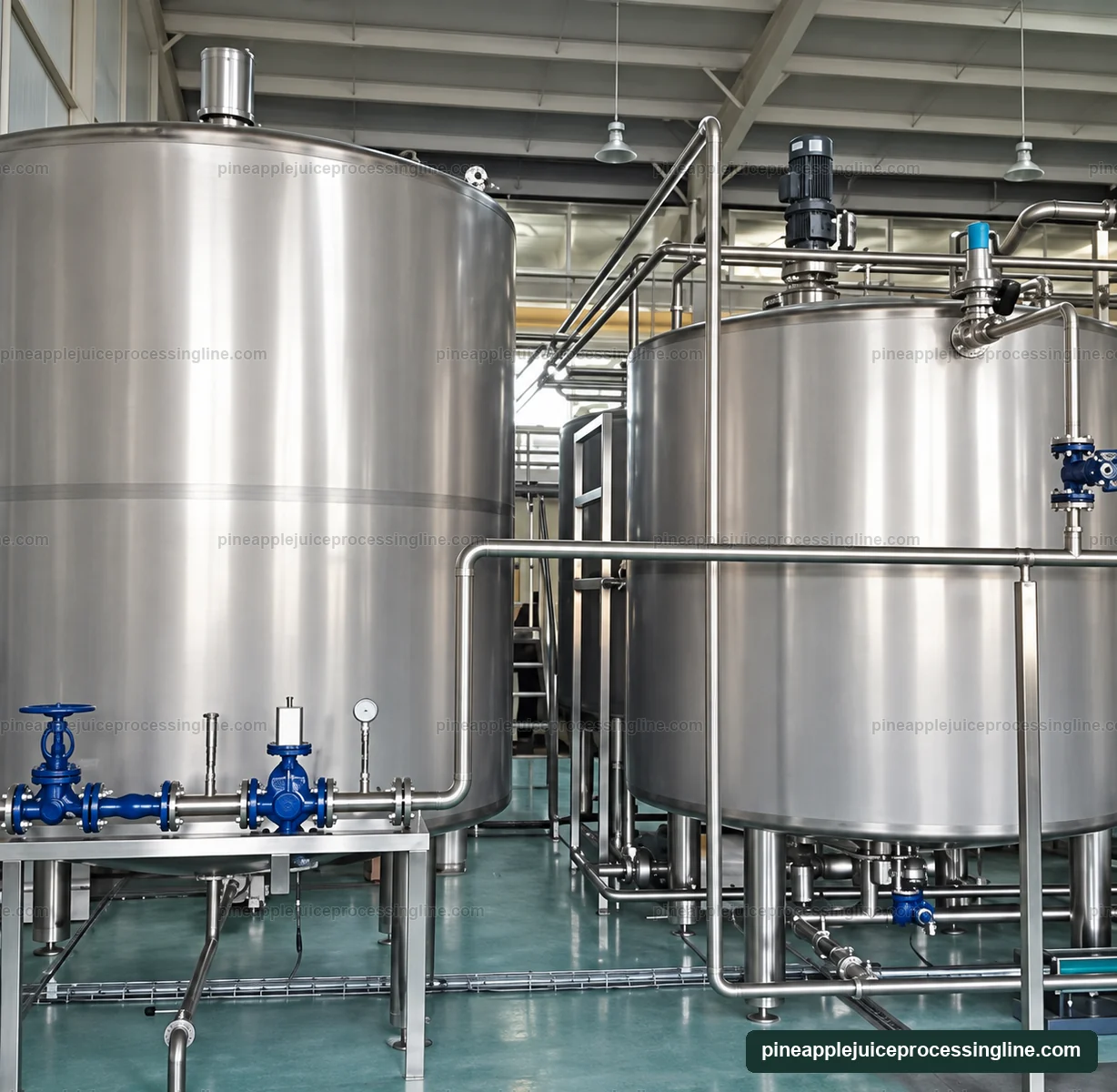
Select the evaporator by how the juice behaves
In a falling-film configuration, juice is distributed over heated surfaces as a film. Stable distribution and sufficient wetting are essential across the operating range. The system separates vapour from concentrated liquid and uses its heating, vacuum and condensing arrangement to sustain the selected duty.
A forced-circulation configuration uses a circulation pump, heater and separation vessel where material behaviour calls for that arrangement. It is an alternative engineering selection, not an automatic upgrade. Pulp characteristics, viscosity as concentration rises, deposition on heated surfaces and the achievable cleaning cycle determine which configuration is suitable.
The installation includes more than the tall vessels. Product pumps, valves, separators, condensate handling, vacuum equipment and service access must fit the selected arrangement. The exact effect count and heat-reuse configuration follow the required duty and utility balance.
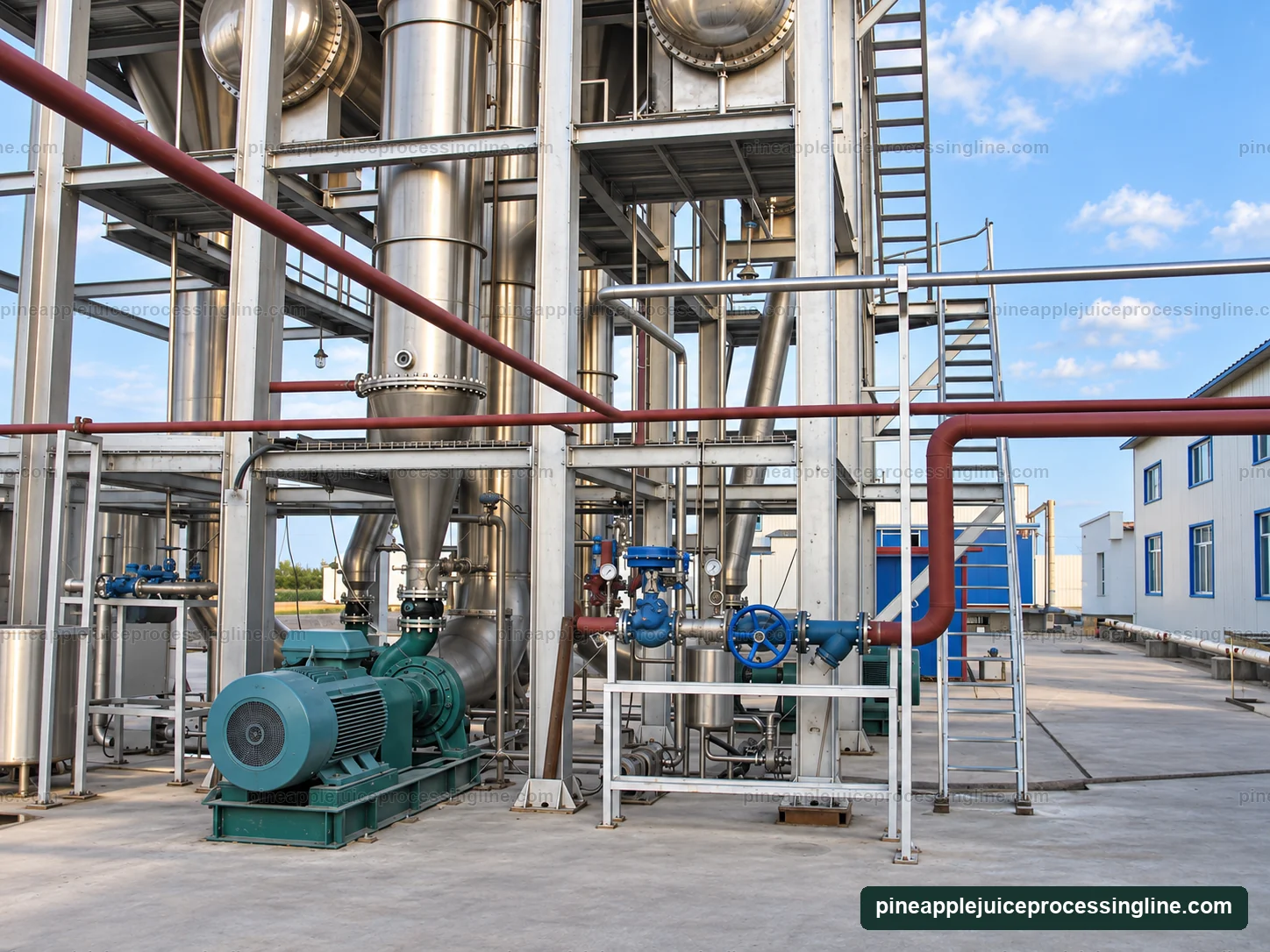
Manage air, aroma and heat as linked process conditions
A vacuum deaerator may reduce entrained gas before concentration, depending on the feed and selected process. Vacuum evaporation itself also exposes juice to conditions that can carry volatile compounds into the vapour stream. Aroma handling, when included, has to be designed around those streams and cannot be replaced by a general claim that low temperature preserves every aroma compound.
Concentrate discharge requires a pump and pipe route suitable for its actual temperature, viscosity and solids. Final thermal processing, cooling and aseptic filling are arranged for the package and product requirements. The evaporator operating temperature is not by itself the final product preservation specification.
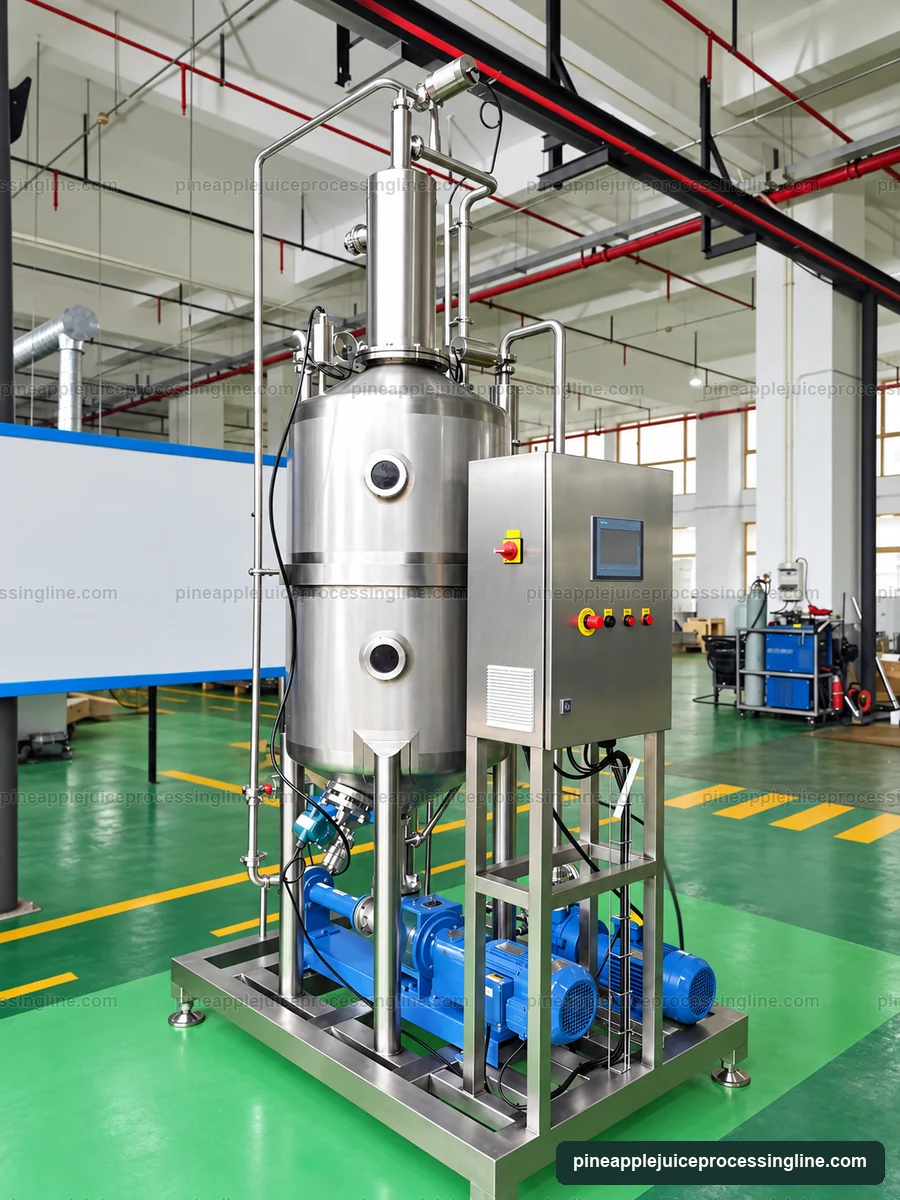
Separate juice feed, concentrate and removed water
For a steady process, feed mass divides into concentrate mass, removed water and any separately collected streams or losses. A soluble-solids balance can estimate concentrate output when feed and target concentrations use a consistent basis and soluble-solids losses are accounted for. Pulp and insoluble material require additional characterisation; a refractometer reading alone is not a viscosity or suspension specification.
Heating demand, condenser load, vacuum capacity and CIP circulation follow the calculated duty and selected equipment. Seasonal changes in juice concentration affect the water load even if feed volume stays the same. A design therefore needs a stated working range, rather than one attractive hourly number.
Add concentration without buying a second fruit front end
For an existing juice plant, the package can begin at the juice reception or feed-buffer connection and include selected finishing, evaporation, concentrate transfer and downstream treatment or filling. Existing extraction machinery can remain upstream where its product and operating rate match the new section.
For a new plant, the fresh-fruit line supplies that same juice interface. In both arrangements, the product inlet, concentrate outlet, condensate and drain routes, utilities, CIP connections and control permissions define the physical supply boundary. Maintenance access around heat-transfer surfaces and pumps is retained in the layout.
At this stage
Practical questions
Must a concentrate line include fresh-fruit preparation?
No. The concentration section can accept an existing juice stream. Fresh-fruit machinery is added only when the purchase also includes washing, preparation and extraction.
Is the final Brix fixed by the equipment name?
No. The intended concentrate, inlet juice and downstream handling define the concentration range. Heat transfer, viscosity, pump selection, cleaning and filling are checked across that range.