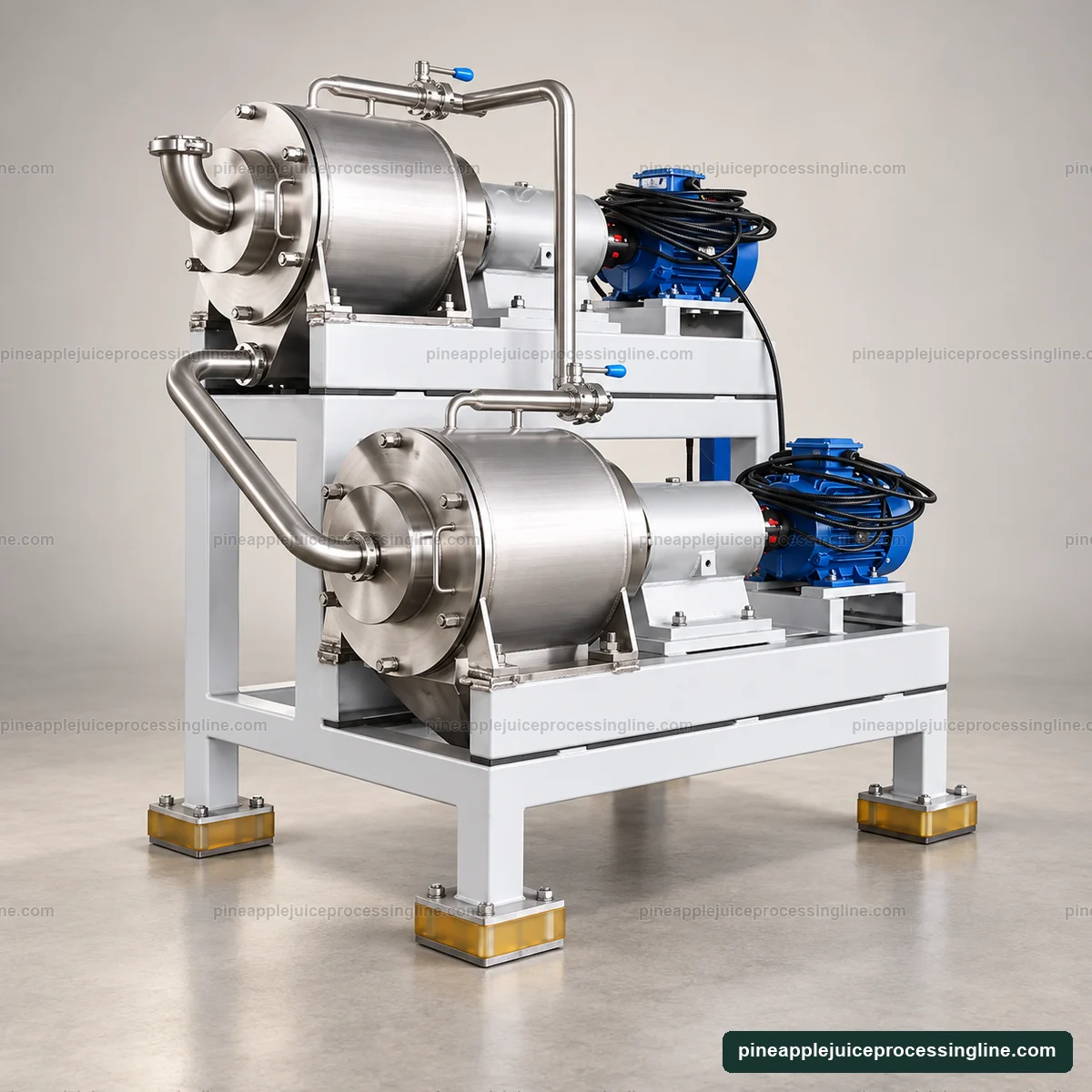
Separate by the working screen and feed condition
The screened stages process suitable prepared material and pass an accepted fraction onward while discharging retained solids. For pineapple juice, the required pulp level and unacceptable coarse material determine the finishing duty.
Screen opening, working action, feed consistency and flow all affect the result. A fine screen is not automatically the best choice if it changes the intended cloudy juice or creates an unsuitable operating load. Evaluate the accepted stream and the residue together.
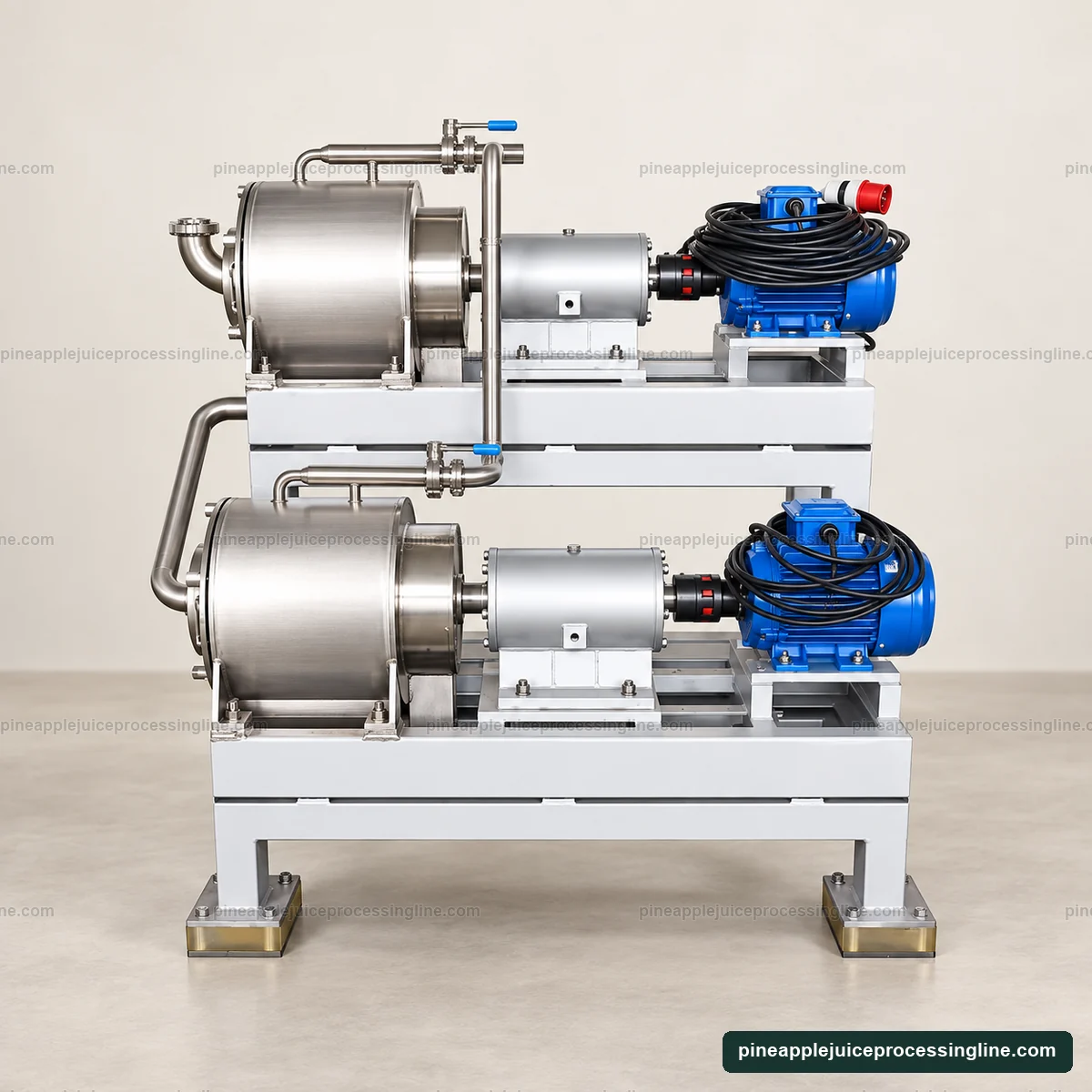
DJ family references for prepared fruit duty
These are generic fruit-family figures. Establish the applicable pineapple rate using the prepared stream, selected screens and accepted-product requirement. Keep that rate separate from whole-fruit receiving and final juice output.
| Model | General catalogue capacity | Listed drive power |
|---|---|---|
| DJ-3 | 1–3 t/h | 4.0 × 2 kW |
| DJ-5 | 5 t/h | 7.5 × 2 kW |
| DJ-10 | 10 t/h | 18.5 × 2 kW |
| DJ-15 | 15 t/h | 30 + 18.5 kW |
| DJ-25 | 25 t/h | 45 + 37 kW |
Retain the product character the juice is meant to have
Finishing provides a mechanical separation stage for coarse fibre and pulp. It is distinct from the pressing duty that produces juice and pomace, and from a membrane process chosen for finer clarification.
Set the pulp specification with the final application in mind. A cloudy juice and a clarified ingredient should not be sent through an identical separation sequence simply because both will later be concentrated or thermally treated.
Make screen inspection part of routine operation
Allow clearance around the covers and driven chambers for removal of screens and inspection of sealing surfaces. The reject outlet needs a practical removal route that does not obstruct access to the machine.
Cleaning should reach deposited fibre at the working screens and internal transitions. Specify the parts that can remain assembled during cleaning and those that require removal or direct inspection. Isolate both drives before access.
At this stage
Practical questions
Does the smallest screen produce the best pineapple juice?
The correct screen supports the required juice and pulp specification at a stable operating load. Compare the accepted product, retained material and cleaning behaviour rather than choosing by opening size alone.