A preparation section that feeds the extraction equipment
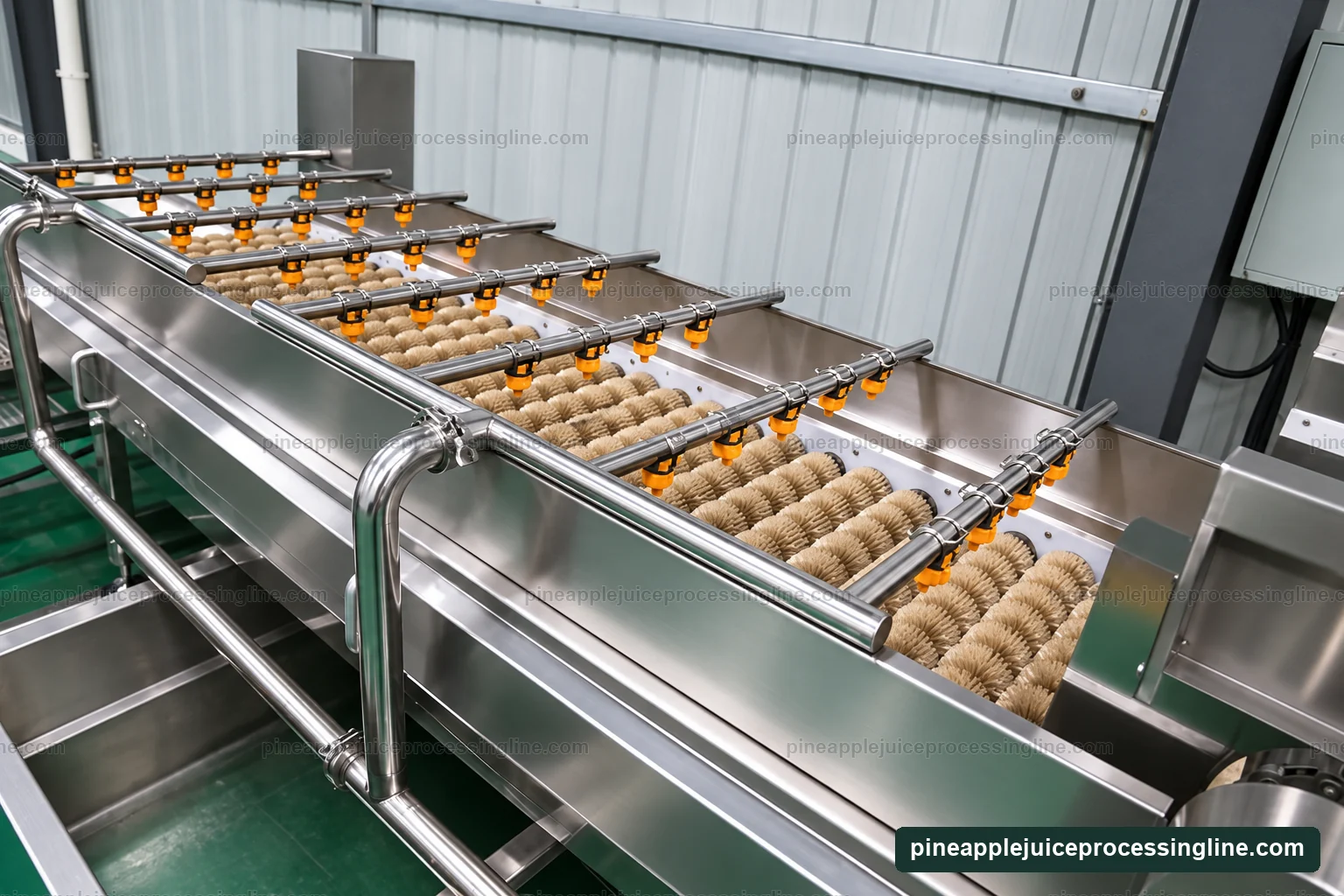
The front end uses an elevator where a change of level is needed, a brush-and-spray washer, and a preparation conveyor with access for inspection and manual work. Soil and rejected fruit leave the clean product route before crushing. Water collection, drainage and access beneath the conveyor are part of the installation, not space left over after the machines are positioned.
Crown removal, shell handling, core inclusion and cutting depend on the chosen route. Prepared flesh and suitable core material create a different feed from fruit carrying shell or from defined fractions supplied by an existing preparation operation. The feed opening, handling method and press duty are selected for that actual material.
Crush the fruit, then separate juice and pomace
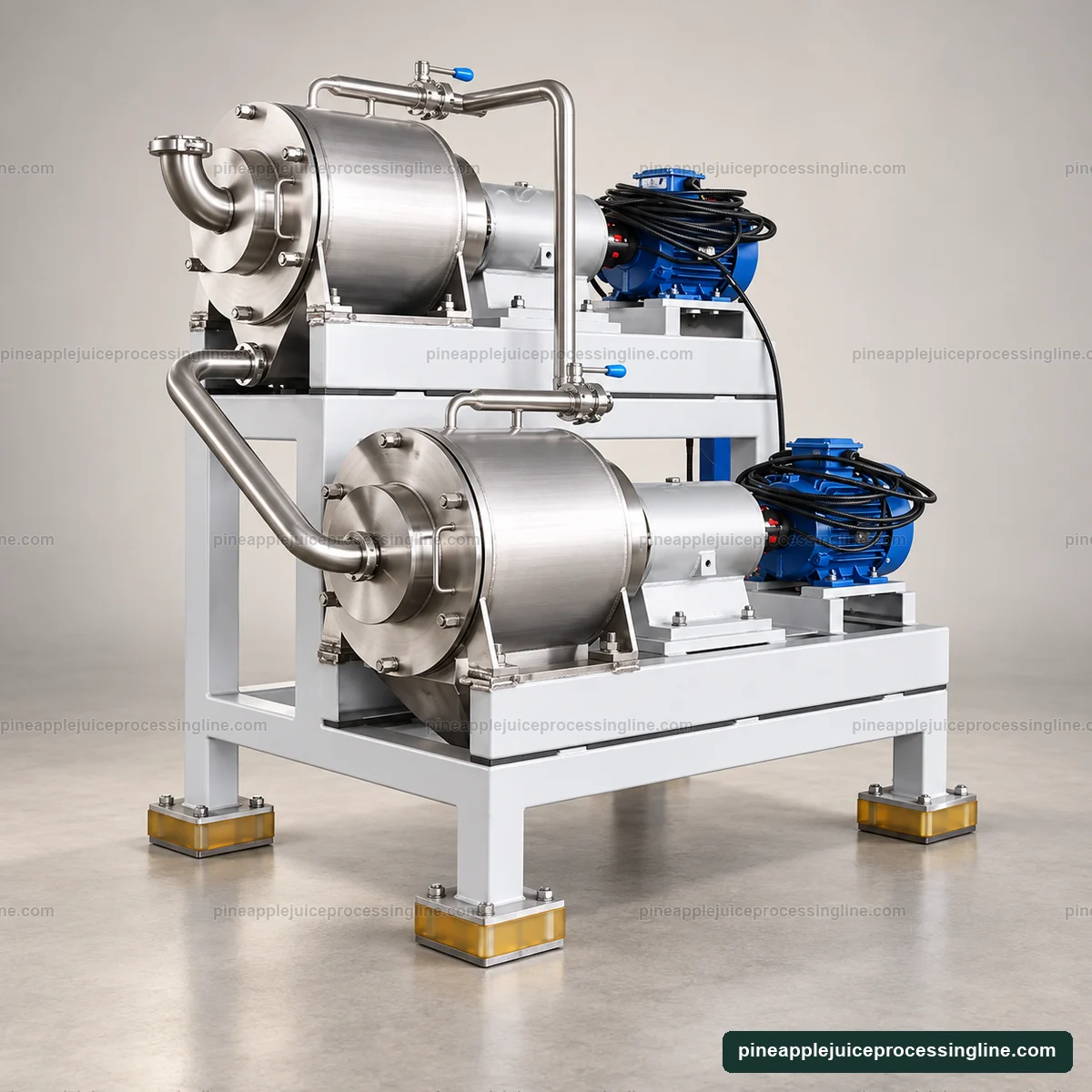
The crusher accepts prepared pieces and reduces them with a driven rotor and working screen. Its job is to deliver a workable mash to the press. Crushing too unevenly can leave large pieces that drain poorly; feeding more mash than the press can distribute creates a bottleneck even when the crusher motor has spare capacity.
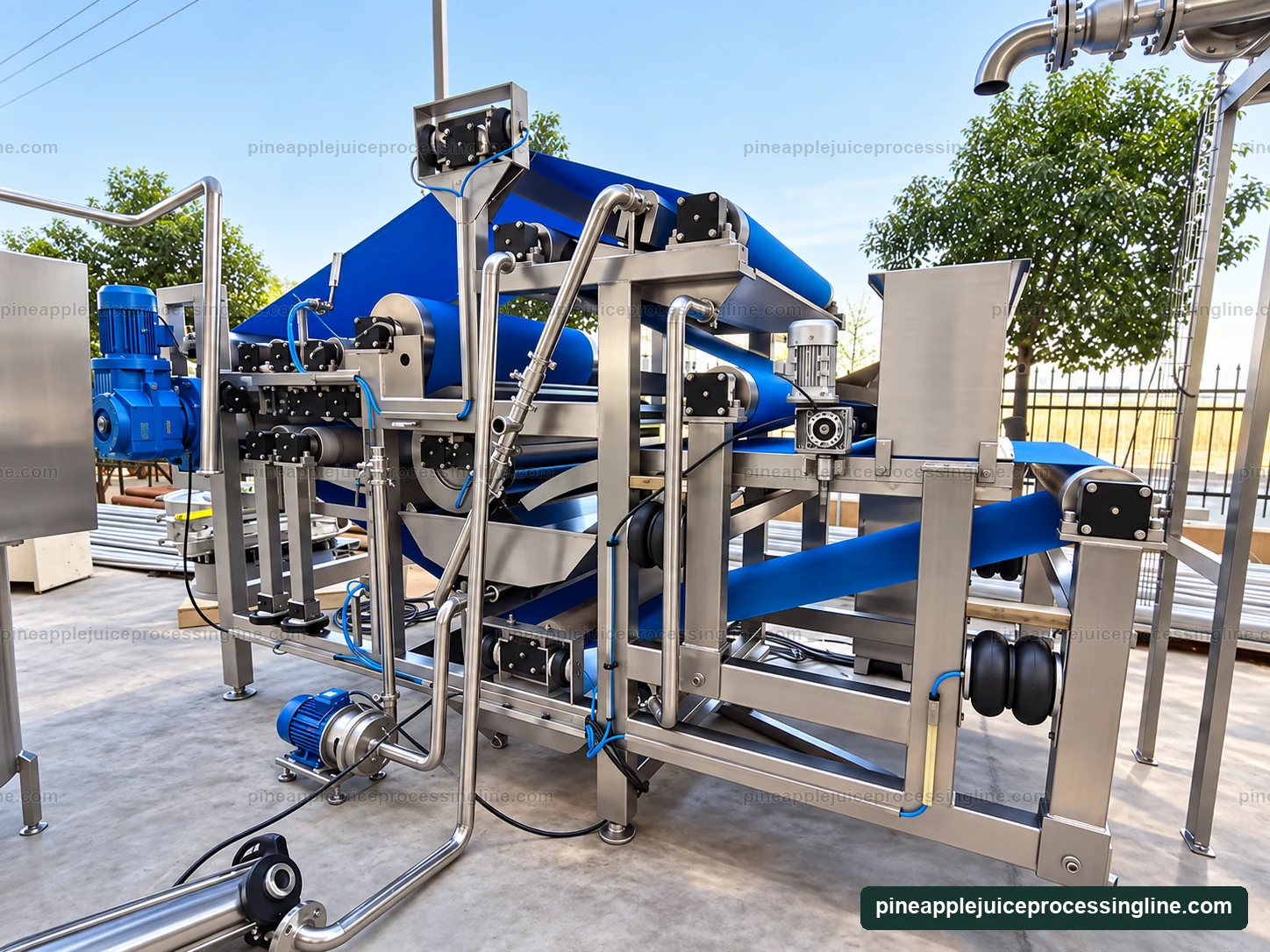
The belt press distributes mash onto a moving belt and carries it through a roller pressing path. Juice drains into the collection system while the fibrous cake leaves by its own discharge route. The feed distributor, collection arrangement and pomace removal need usable access throughout the production run. Press performance is established with the selected fruit preparation and feed condition, rather than inferred from a crusher nameplate.
Choose the juice character after coarse fibre removal
A screened finisher removes coarse fibre from the extracted stream and sets the feed condition for the liquid-processing section. The available two-stage assembly carries out sequential screening within one machine. It does not replace the belt press, and its screened outlet should not automatically be described as clear juice.
For a cloudy juice product, the aim may be to retain a controlled fine pulp fraction while removing unwanted coarse material. A clear-juice route adds a separate clarification duty. Tubular ultrafiltration can be assessed for that duty, with the retained solids stream, membrane cleaning and product trials included in the configuration.
Connect a variable extraction stream to steady juice treatment
Buffer vessels and transfer equipment decouple short variations in pressing from the downstream treatment rate. Their working volume is based on recovered juice flow, required operating time and usable vessel levels. A tank cannot compensate indefinitely for an undersized press or a filling stop.
Vacuum deaeration can be included where entrained air, foam or the product specification justifies it. Tubular heat treatment and the filling interface are then configured for the juice composition, flow and package. An aseptic bag filler requires a compatible sterile product supply and a controlled connection through to the bag fitment. Thermal hardware capability alone does not establish a preservation process.
Keep the whole line measurable and accessible
The supply can combine the front end, extraction, treatment, bulk filling and cleaning equipment, with site utilities and existing machinery identified at the connection points. Open belts, brushes and removable screens need physical cleaning access; tanks and suitable closed product circuits connect to the CIP system. Layout and controls must preserve both routes.
| Location | Useful production quantity | Design consequence |
|---|---|---|
| Fruit intake | Incoming fruit mass per hour | Receiving, washing and preparation capacity |
| Press inlet | Prepared mash mass per hour | Crusher feed, distribution and belt loading |
| Juice treatment | Juice mass or volume per hour at stated conditions | Buffer, pump and thermal duty |
| Bulk packing | Net filled product and complete handling cycle | Bag changes, transfer and downstream accumulation |
At this stage
Practical questions
Does the line require every pineapple to be peeled and cored?
No single preparation sequence applies to every juice route. The condition of the incoming fruit, the fractions used for juice and the extraction equipment determine crown, shell, core and cutting arrangements. The preparation conveyor provides handling and work access; automatic peeling or coring is a separate equipment scope.
Can the same extraction section supply a concentrate line?
Yes, an extraction section can feed a matched concentration section. Its recovered juice flow and composition become the evaporator feed basis. Evaporation duty is calculated from the water to be removed, so it cannot be selected from incoming fruit tonnage alone.