Clean the outside before exposing the product
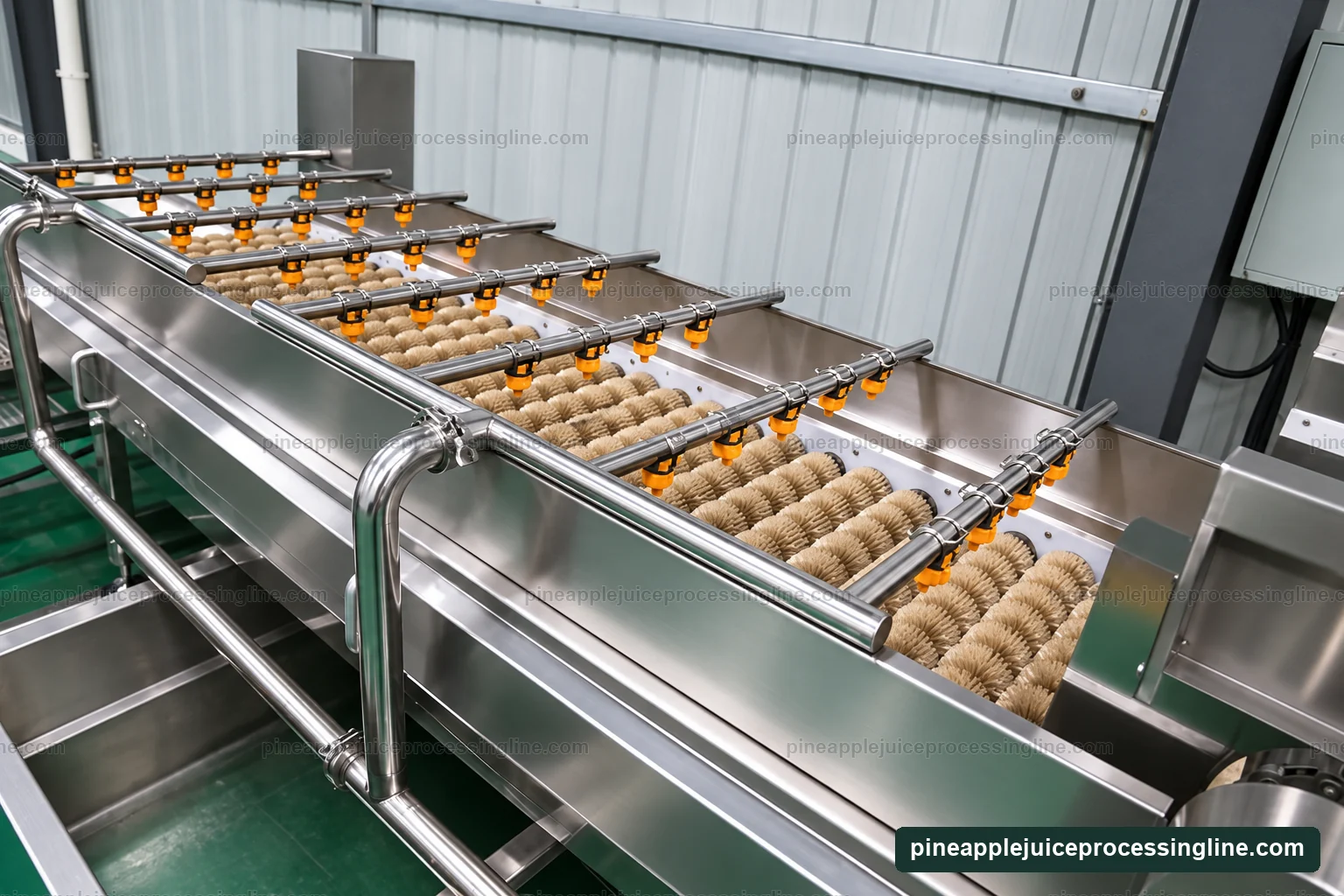
Receiving separates damaged or unsuitable fruit from material entering production. The brush washer combines surface contact with sprays; drainage carries away soil and wash water. Brush action, fruit movement and water management must suit the pineapple surface and incoming condition.
The washer is a cleaning machine. It does not perform the cutting operations of a preparation station, and clean-looking fruit still requires inspection. The wet receiving area should drain away from exposed prepared material, with separate removal routes for debris and rejected fruit.
Crown, shell and core follow the chosen material route
The core is fibrous tissue rather than a stone. Its inclusion is a process choice within a suitable extraction route. Shell fragments and eyes place a different burden on downstream screening and product quality. These distinctions determine the preparation work instead of forcing every project into one universal peel-and-core sequence.
| Material | Preparation implication | Effect on extraction |
|---|---|---|
| Whole incoming fruit | Remove unsuitable material and establish the selected crown, shell and cutting sequence | Preparation changes the mass and composition delivered to the crusher |
| Prepared flesh with an agreed core fraction | Control piece size and consistency of the supplied fractions | The fibrous component influences crushing, press loading and finishing |
| Defined fractions from another preparation operation | Receive separately with known handling history and composition | A separate feed basis is needed; it is not whole-fruit recovery |
Make the preparation conveyor useful to operators
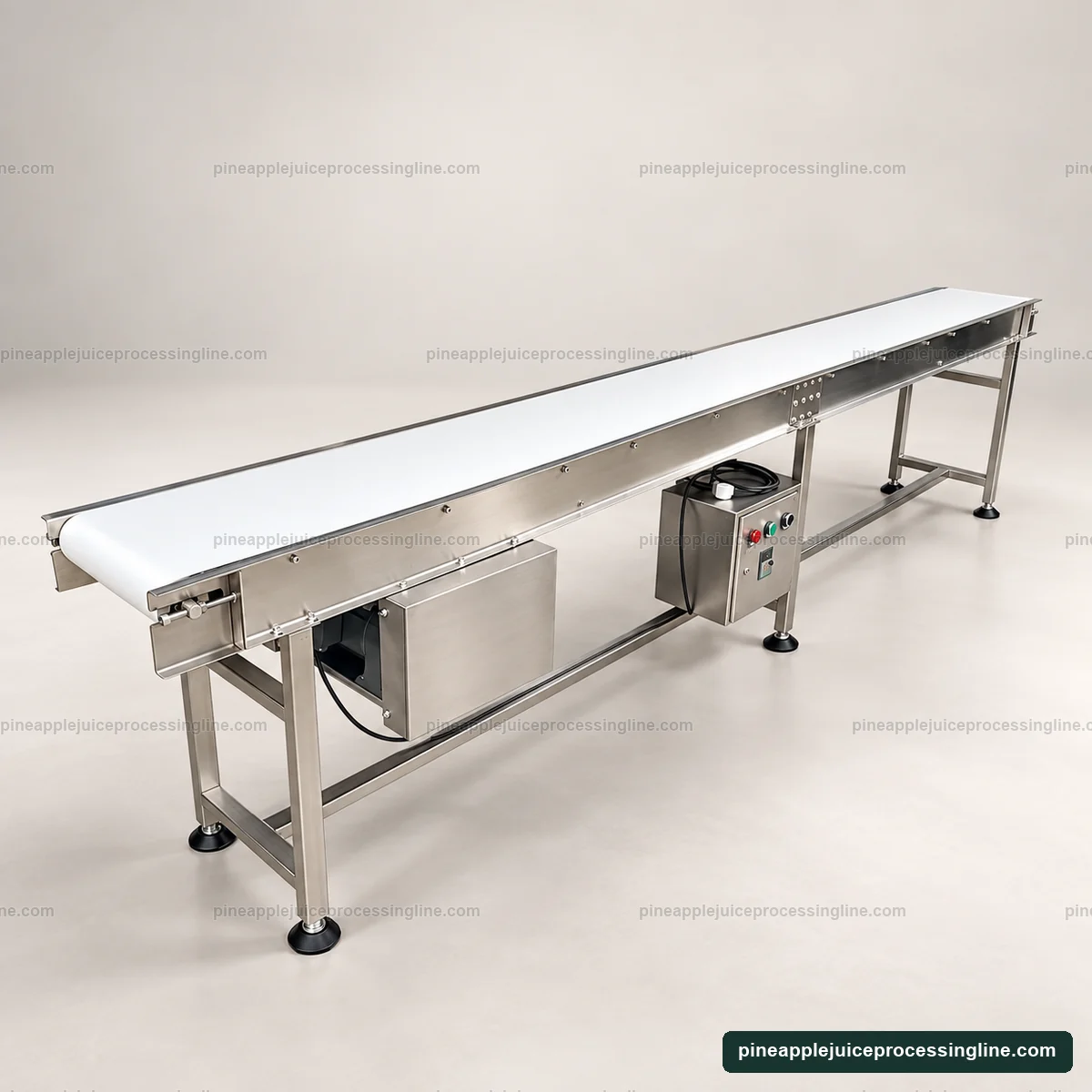
Conveyor width, presentation speed, working height and access along the belt influence how consistently operators can inspect and prepare the fruit. Rejected material and cut fractions need reachable collection points that do not obstruct the product path. Safe tool handling and guarded moving parts belong in the workstation layout.
The outlet feeds an agreed crusher opening and transfer height. Cutting must provide pieces that can enter the machine without manual forcing or bridging. A steady supply of suitable pieces is more useful than a high upstream belt speed followed by repeated crusher stops.
Keep preparation in the production balance
Incoming fruit mass, preparation rejects and prepared feed are separate quantities. Recording them over the same operating interval shows whether a change in extracted juice originates in raw material, preparation or pressing. Comparing only filled product against incoming fruit hides those differences.
Cleaning removes accumulated fibres and pieces from the belt, rails and transfer points, with access below the working surface. Wash water from this area remains separate from juice collection. The cleaning arrangement must also leave time for inspection of the crusher feed path before restarting.