Inspect the construction that performs the work
The open crusher view shows the working rotor, screen, chamber access and separate drive arrangement. The belt press shows its belt path, roller supports and collection area. The finisher combines two screening stages with access to the working parts. These details explain where product passes, where fibre accumulates and which parts must be reachable.
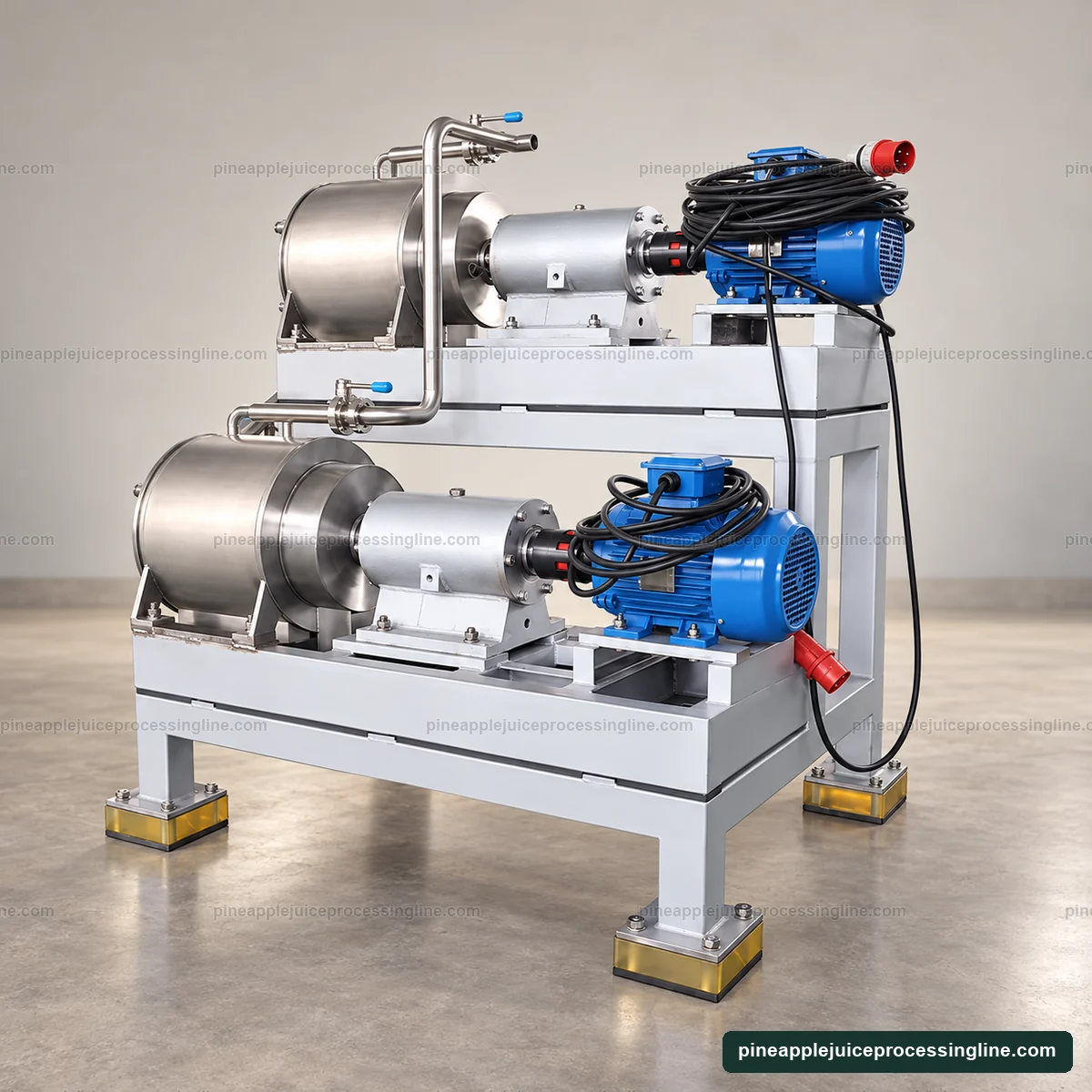
On the liquid side, vessels, tubular processing assemblies, pumps, valves and control enclosures form the treatment system. Product-contact specifications, seals, surface requirements and component selection follow the selected duty. A stainless appearance alone is not a material-grade certificate or a description of every internal component.
Deliver a coordinated equipment package
The equipment schedule identifies each supplied machine and the selected configuration. A process arrangement and layout locate the feed and product connections, utilities, access spaces and interfaces to existing plant. Conveyor transfers, press-juice collection, buffer levels and pump connections are resolved at the same time as the major equipment selection.
Mechanical equipment, controls and site services meet at explicit boundaries. The scope distinguishes skid-mounted components from site pipework, utility generation, civil works and existing equipment. This is particularly useful when an extraction module or evaporator is being added to an operating plant.
Prepare the information needed to install and maintain the equipment
Project documentation can cover the selected machine arrangement, connection and utility requirements, control functions, operating instructions and maintenance information. The document schedule should identify what accompanies each machine and what is issued for the assembled line.
Packing, lifting and positioning arrangements are developed around the actual shipment and site access. Once installed, operators need the identification of removable screens, belts, seals and other service components, together with the relevant operating and cleaning procedures. Spare parts are selected from the delivered configuration rather than a generic fruit-line list.
- Machine identification and agreed technical configuration.
- Layout, connection points and the applicable utility schedule.
- Operating, cleaning and maintenance information for the supplied equipment.
- Control and electrical information appropriate to the supply scope.
- Selected wear parts and commissioning or service items included in the order.
Plan installation support, commissioning and training around the supplied scope
Engineering, installation and commissioning support, and operating training can be included for the selected package. Their extent follows the equipment supplied, site responsibilities and agreed project arrangements. The programme should allow time for mechanical inspection, utilities, control checks and the product runs included in acceptance.
A factory or site acceptance plan defines the conditions and evidence to be collected. For extraction, those conditions include the prepared feed and separate juice and pomace measurements. For liquid treatment and filling, the plan addresses flow, controls, cleaning and the selected process interfaces. Equipment inspection, functional trials and product validation are different activities and should have distinct records.