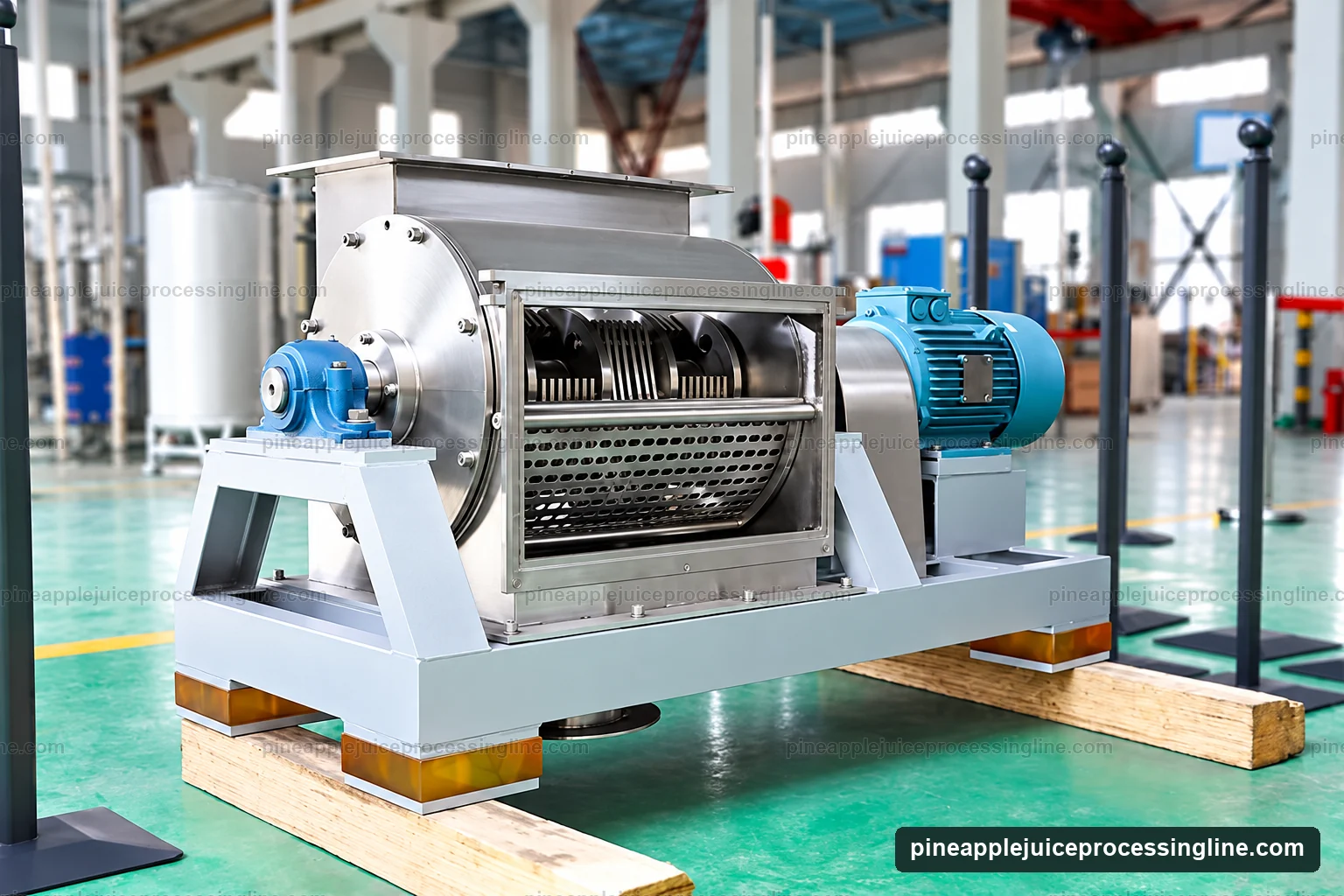
Three machines, three different jobs
The two-stage finisher is one combined assembly, not a second extraction line. Its inclusion and screen selection follow the juice requirement and the downstream equipment. A customer who already has suitable finishing can purchase a package that ends at the press-juice collection interface.
| Machine | What happens inside the section | What leaves it |
|---|---|---|
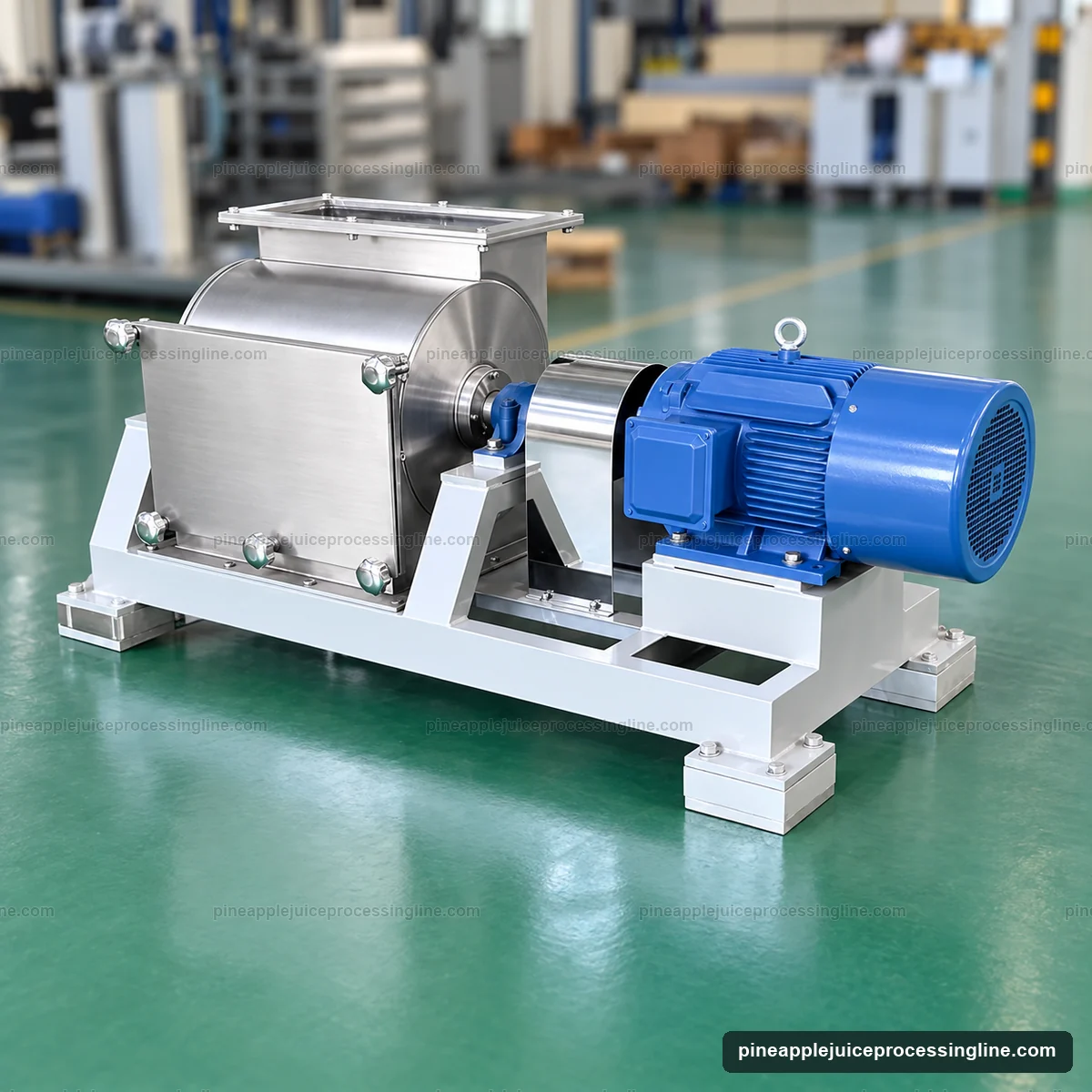
| Fruit crusher | A driven rotor reduces prepared fruit against the working arrangement | Crushed mash ready for distribution onto the press |
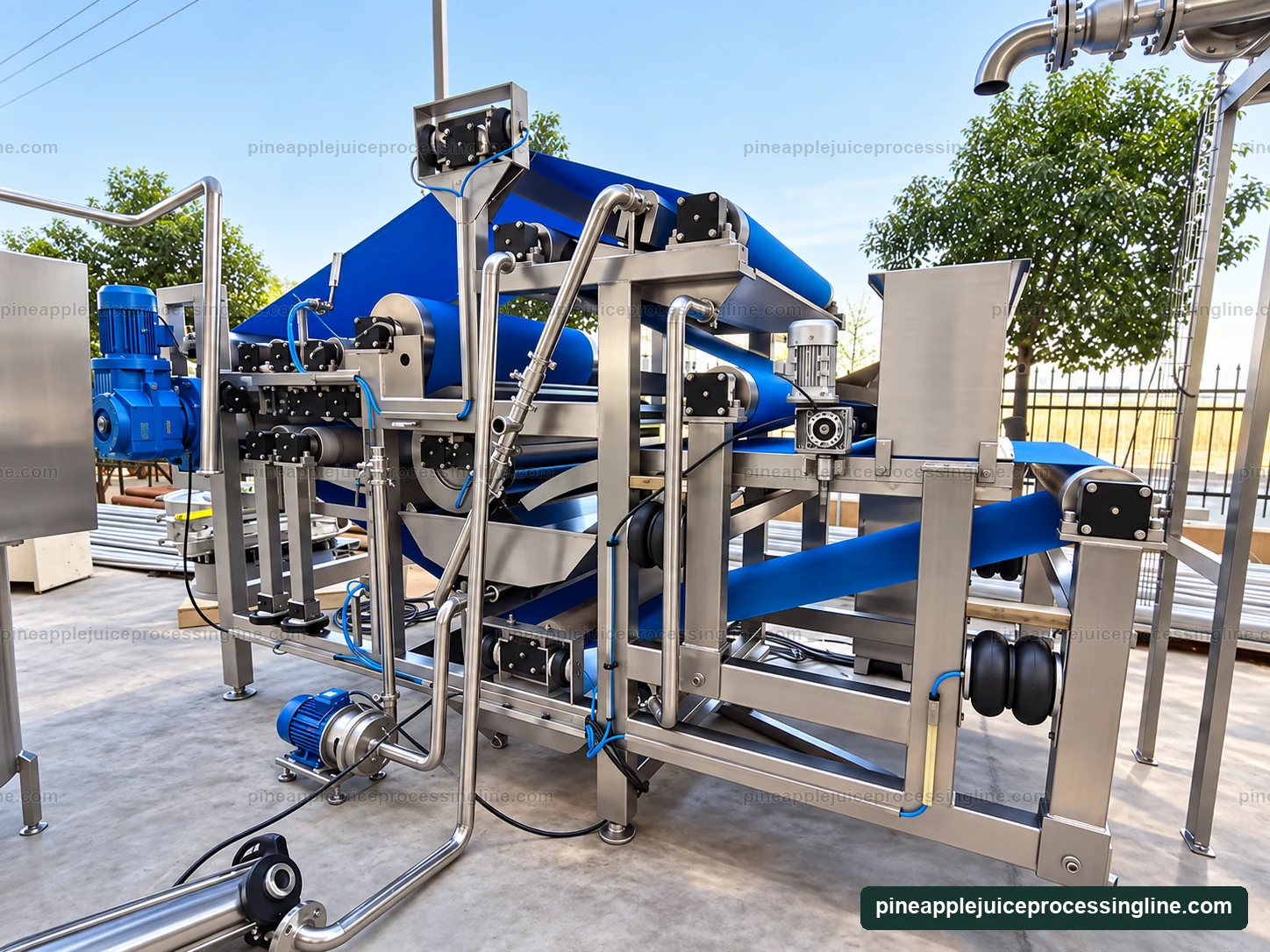
| Belt press | Moving belts and rollers drain and press the mash | Collected juice and a separate fibrous cake |
| Screen finisher | Sequential screening separates coarse material from the liquid stream | Finished juice and a screened reject fraction |
Build around the actual preparation outlet
Prepared fruit can arrive from a manual preparation conveyor or another suitable upstream operation. The inlet height, drop, holding space and feeding method should produce a consistent supply without forcing operators to push fruit into the crusher. Large pieces, excessive shell fragments or a changing proportion of fibrous core can alter the behaviour of the mash.
The crusher and press are matched at the material interface. The press needs an even layer across its working width, not intermittent piles from an oversized crusher. Feed distribution, a suitable connecting chute or transfer arrangement, and the ability to stop upstream feeding when the press stops are part of the module integration.
Give juice and pomace independent handling routes
Juice collection must drain to a receiving vessel or transfer system without backing up around the press. The downstream pump is selected for the recovered liquid, its pulp content and the receiving pressure. It is not sized by copying the whole-fruit capacity from a preparation conveyor.
Pomace removal needs continuous access and enough collection space for the intended run. Wet cake and loose material should not cross the clean juice route. If the existing downstream treatment cannot accept the full extraction rate, a suitable buffer and controlled production rate are required; storing untreated juice indefinitely is not a line-balancing strategy.
Access for start-up, inspection and cleaning
The operating sequence brings downstream receiving equipment into readiness before admitting fruit. The press reaches its intended running condition, the crusher and transfer path are checked, and feed is introduced progressively. A common stop or interlock prevents mash continuing to arrive at stopped extraction equipment.
The belt, rollers, collection areas and crusher access covers require physical inspection and cleaning. Fibres caught around exposed parts must be removed with the machine safely isolated. The finisher has its own screen-access and reassembly checks. A closed-circuit CIP connection on the liquid outlet does not clean every open part of this module.
Assess extraction with a complete material record
A useful trial records the prepared feed entering the module, collected juice, screened rejects and wet pomace over the same interval. Feed composition, fruit condition, crusher configuration, press settings and cleaning interruptions belong beside those figures. A result obtained with prepared flesh is not automatically the recovery of a whole-fruit plant.
The module supply covers the selected extraction machinery and agreed connections. Washing and preparation, final thermal processing, sterile product handling and packaging can be added as separate equipment sections. This allows a processor to improve extraction while retaining suitable existing plant.
At this stage
Practical questions
Can the crusher be supplied without the press?
The crusher is a separate machine and can connect to suitable existing extraction equipment. Its prepared-feed range, discharge arrangement and operating rate must match that equipment. Crushing alone does not provide the juice-and-pomace separation of a press.
Does this module produce an aseptically packed product?
The extraction module produces juice for further processing. Aseptic product handling requires the matched thermal, sterile transfer and bag-filling section downstream.