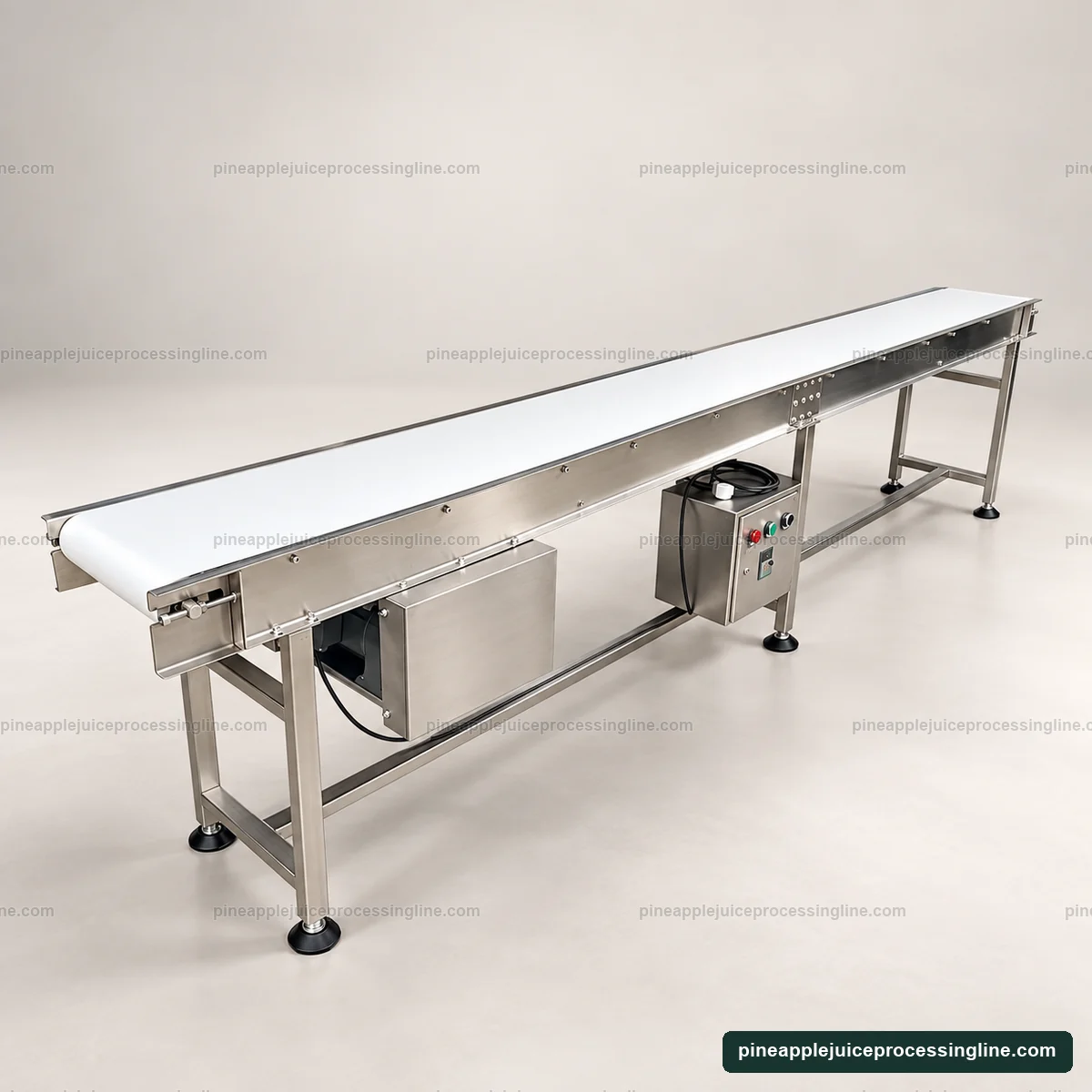
Make inspection practical at the chosen loading
The belt surface moves fruit through a defined working length. Operators need clear sight of the material, suitable reach and accessible rejection points. Those needs influence working width and speed as well as the number and position of operators.
Show the conveyor alongside adjacent work surfaces and the next machine on the layout. A belt that moves enough mass can still be unsuitable for inspection if fruit arrives in a deep pile or the working positions are obstructed.
Define preparation from the incoming material
A plant receiving whole pineapples has different preparation work from a plant receiving prepared flesh or a specified stream from an existing operation. Crown handling, peel removal, core handling and cutting are chosen around that material and the intended juice specification.
This conveyor provides presentation and transfer. Cutting tools, workstations and any mechanised preparation equipment require their own arrangement and operating scope. Accepted pieces should reach the crusher in the agreed form, with foreign material and unsuitable residues already removed.
Leave room for hands, containers and waste removal
| Layout element | Practical requirement |
|---|---|
| Operator positions | Reachable working height, adequate standing space and access to stops |
| Accepted material | A visible onward route without mixing with rejected fruit |
| Preparation residues | Defined containers or handling routes that can be cleared during operation |
| Transfer to crusher | Agreed piece size and controlled feeding to the hopper |
| Guards and cleaning | Protected moving parts with access after safe isolation |
Clean the transfer points as well as the belt surface
Belt edges, end rollers, side rails and the lower frame can retain wet preparation residues. They should be reachable for cleaning and inspection, with runoff directed away from the accepted-fruit route.
Specify the belt contact material, washdown conditions and maintenance space before finalising the frame dimensions. Manual inspection should be accompanied by the plant quality controls appropriate to defects that visual sorting cannot detect.
At this stage
Practical questions
Can this stage connect to an existing preparation room?
Yes, its transfer arrangement can be specified around the existing outlet height, prepared-material form and feed pattern. The accepted material and residue routes should remain clear at that connection.