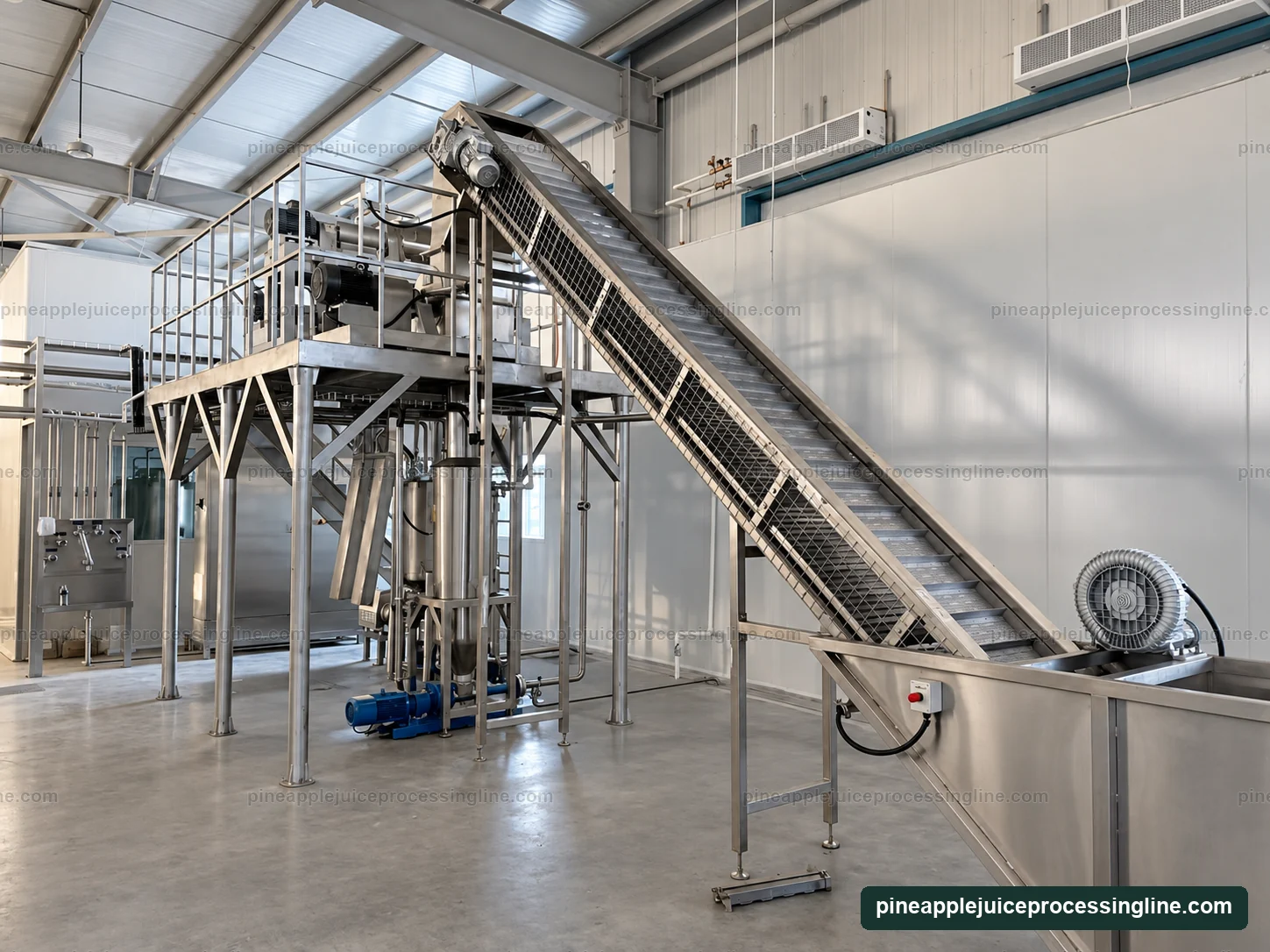
Support the fruit along the incline
The moving belt carries material within a defined transfer path. Retaining features, side clearance and the receiving geometry prevent feed from relying on a free fall between unrelated machines. A raised discharge can connect a low-level washing or receiving area with an elevated preparation inlet.
Pineapple handling needs attention to the shape actually entering the conveyor. Whole fruit, fruit with crowns removed and cut sections occupy different space and behave differently on an incline. Specify that condition before choosing belt width and the retaining arrangement.
Fit the receiving and discharge envelope
| Connection | Equipment decision |
|---|---|
| Receiving area | Loading height, incoming fruit dimensions and the size of feed surges |
| Inclined section | Lift, floor length, belt support and access alongside the machine |
| Upper outlet | Discharge width, permissible drop and receiving-machine clearance |
| Control interface | Speed adjustment and stop signals coordinated with the next operation |
Keep preparation waste away from the accepted fruit
An elevator can serve different positions in a line, but its outlet should deliver to one clearly defined process step. Show rejected fruit, removed crowns or other preparation residues on their own routes rather than using the conveying area as temporary waste storage.
The lift and discharge should leave room to work at the next machine. Guard openings, platforms and cleaning access need to remain usable after the receiving hopper and surrounding equipment are installed.
Reach the belt return and receiving corners
Wet fibre and peel fragments can lodge in the receiving section, around retaining features and on the belt return. Include those surfaces in the washdown procedure and provide a drainage route that does not cross clean fruit handling.
The final specification should identify belt material, drive protection, belt replacement access and the selected speed-control method. Handling capacity is checked against the intended material and transfer arrangement; it does not state the juice output of the extraction section.
At this stage
Practical questions
Should the elevator be sized from finished juice output?
Use the fruit mass and physical form at the elevator. Preparation removes material before extraction, and pressing separates juice from pomace, so finished juice flow is a different sizing quantity.