Match the bag fitment to the filling head
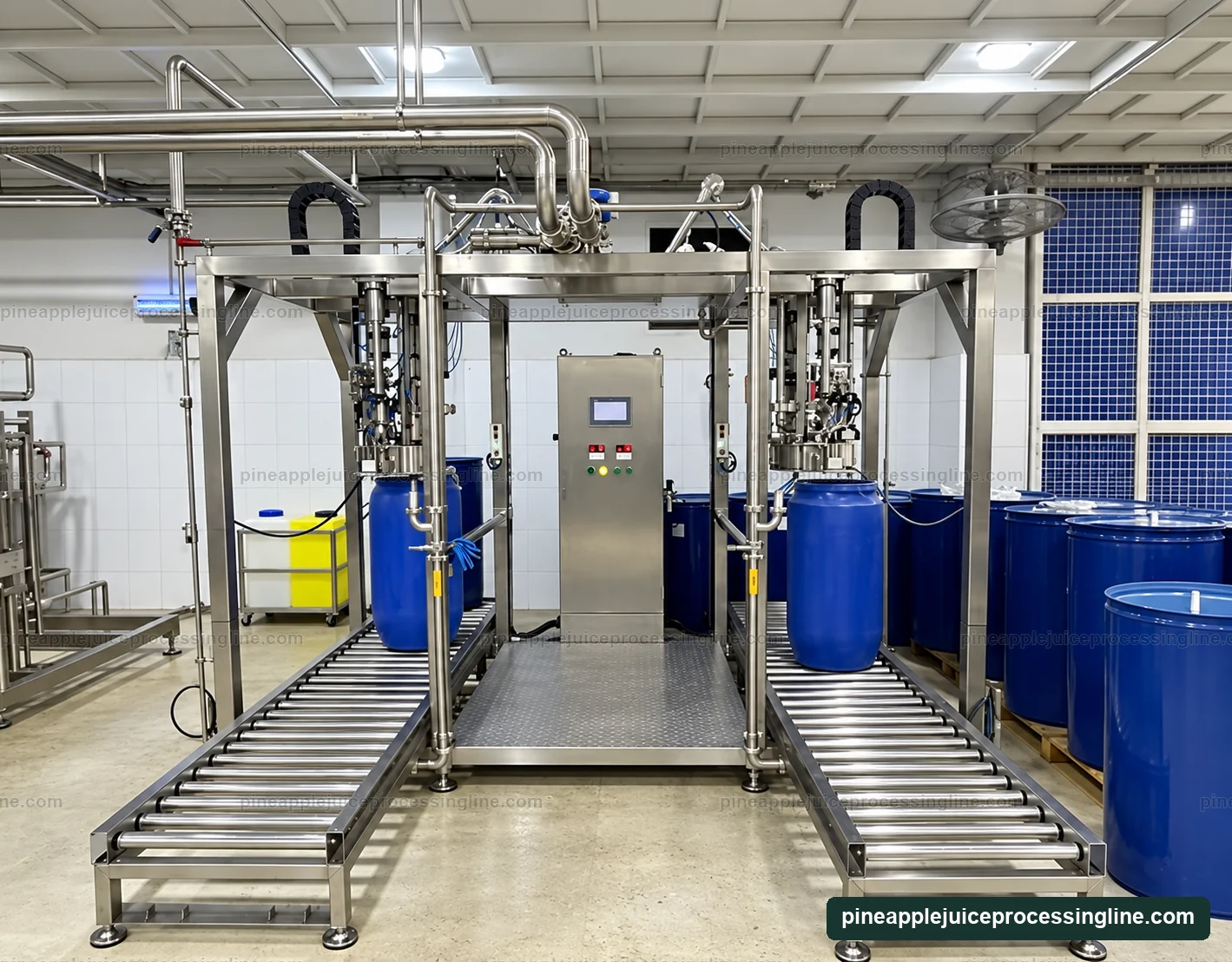
The fitment and head establish the physical connection through which product enters the bag. Bag support, head access and handling must suit the actual format. A bag-in-drum arrangement also needs a practical route for presenting and removing the container.
The family includes bag, bag-in-box and bag-in-drum configurations. Select the actual bag and fitment early enough to specify the head, support and handling equipment together rather than treating them as interchangeable accessories.
Measure the full filling cycle
A filling cycle includes preparation, product transfer, closure and container exchange. Two positions describe the physical arrangement; they do not alone determine whether the selected mode is simultaneous or what output it achieves.
The filling measurement and acceptance tolerance should be agreed for the product and package. Use the actual juice or concentrate condition when assessing flow and handling, since viscosity and the pack changeover can limit the effective cycle.
| Packing input | Equipment relationship |
|---|---|
| Bag and fitment | Head compatibility, support and closure sequence |
| Net product per pack | Selected measurement and stopping control |
| Product condition | Flow, viscosity, temperature and permitted particles |
| Container movement | Presentation, exchange and removal time |
| Available services | The selected cleaning, sterilisation and operating utilities |
Connect filling to the agreed aseptic process
The thermal outlet, intervening pipework, valves and filling head form a connected product route. Define the required sterile boundary and the preparation procedure across that route.
Production interruptions and off-condition events need explicit handling. A mechanically suitable filler does not compensate for an inadequately treated product or an interrupted aseptic connection. Packaging suitability and finished-product validation remain part of the complete process.
Allow service and inspection around the head
Provide access to product-contact connections, seals and the head components covered by the maintenance procedure. The cleaning and sterilisation scope should identify the required circuits and any manual operations.
An acceptance run should include repeated fills, package handling, the agreed measurement check and the full changeover sequence. Record what the selected configuration achieves under those conditions rather than assigning a universal bag rate or shelf-life claim.
At this stage
Practical questions
Can one filling head handle all catalogue bag volumes?
The family range covers different configurations. Confirm the selected bag volume, fitment, head and handling package together; changing pack size may require a different arrangement.