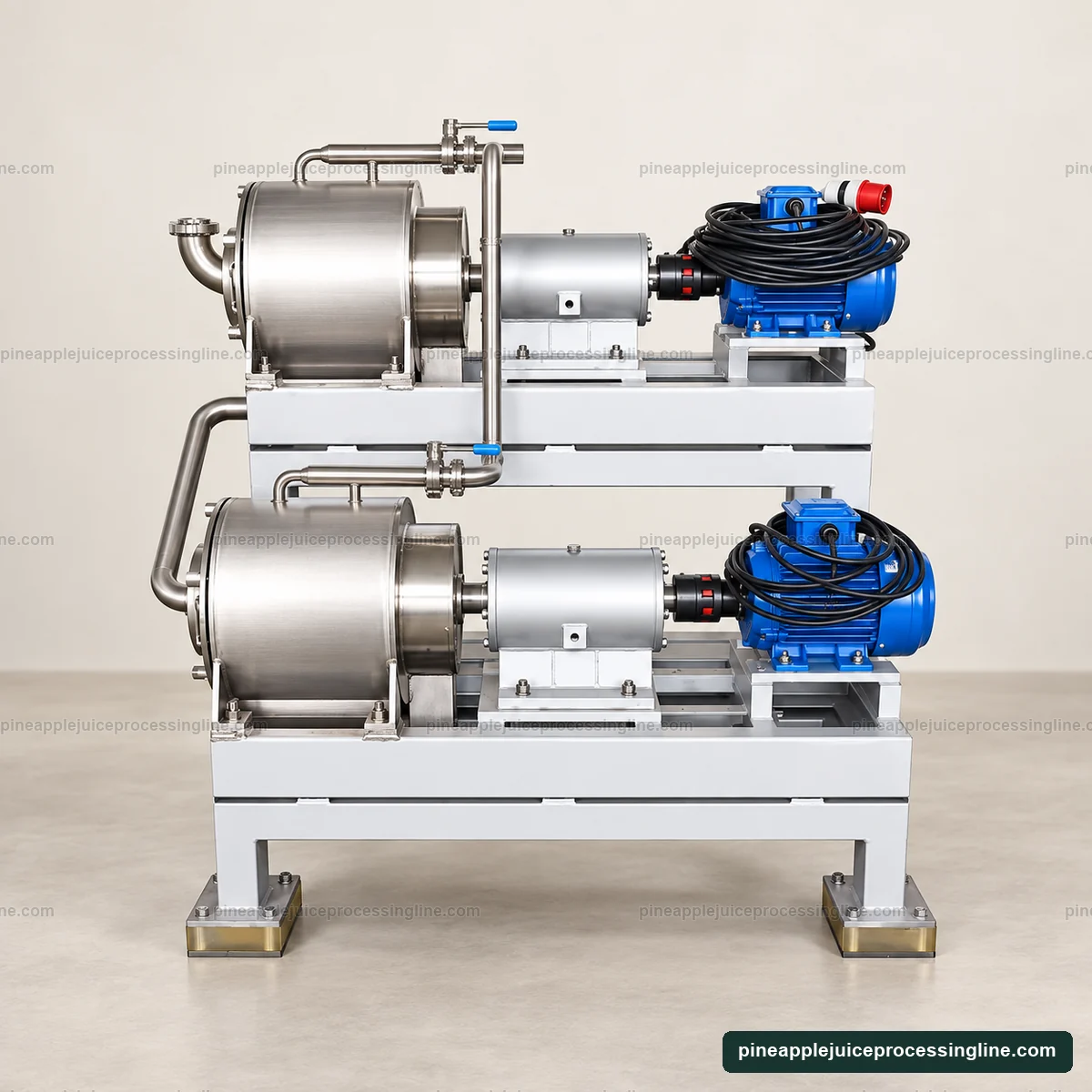
Use screens for the coarse fraction
The combined finisher passes material through sequential screened stages. Its screen selection and operating arrangement influence the retained fibre and the liquid or fine pulp passing onward. Access to the screens matters because wear, blocked openings or incorrect seating can change the result.
For cloudy juice, the purpose is often to remove objectionable coarse material while retaining an agreed fine pulp fraction. The result is assessed against the intended product and downstream equipment. A screen opening alone cannot predict optical clarity, settling behaviour or membrane performance.
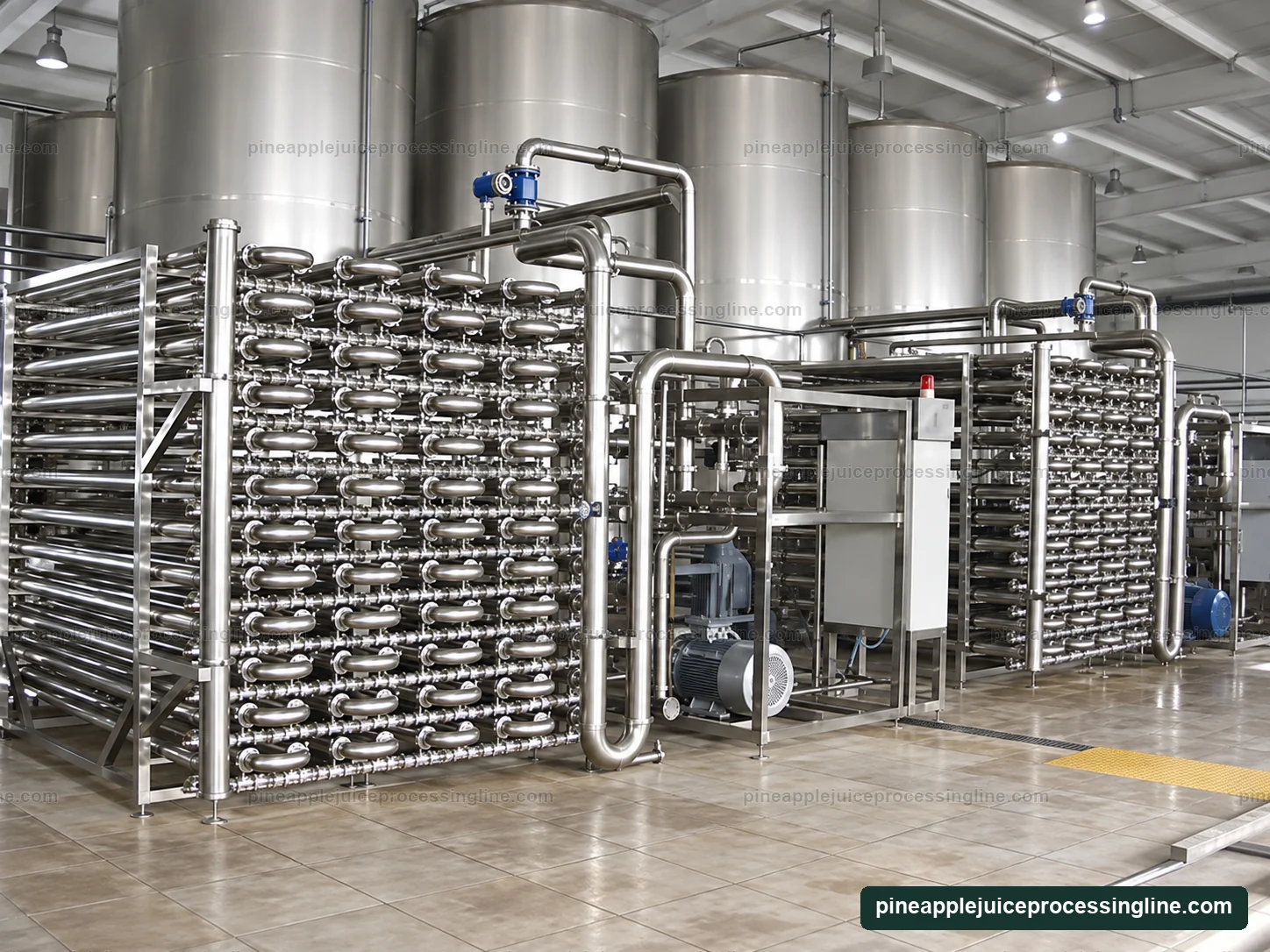
Tubular ultrafiltration adds a membrane separation
The tubular membrane arrangement has banks of connected modules, headers and a circulating product path. The selected membrane separates a permeate stream from retained material. Feed preparation, circulation, pressure conditions and concentration of the retained stream affect usable flux and the run between cleaning cycles.
This is a distinct machine from a tubular heat-treatment skid. The membrane material, separation characteristics and cleaning limits belong to its configuration. For pineapple juice, product trials establish the resulting clarity, product character and operating behaviour; a generic module count is not a guaranteed juice output.
Filter-aid clarification has another operating pattern
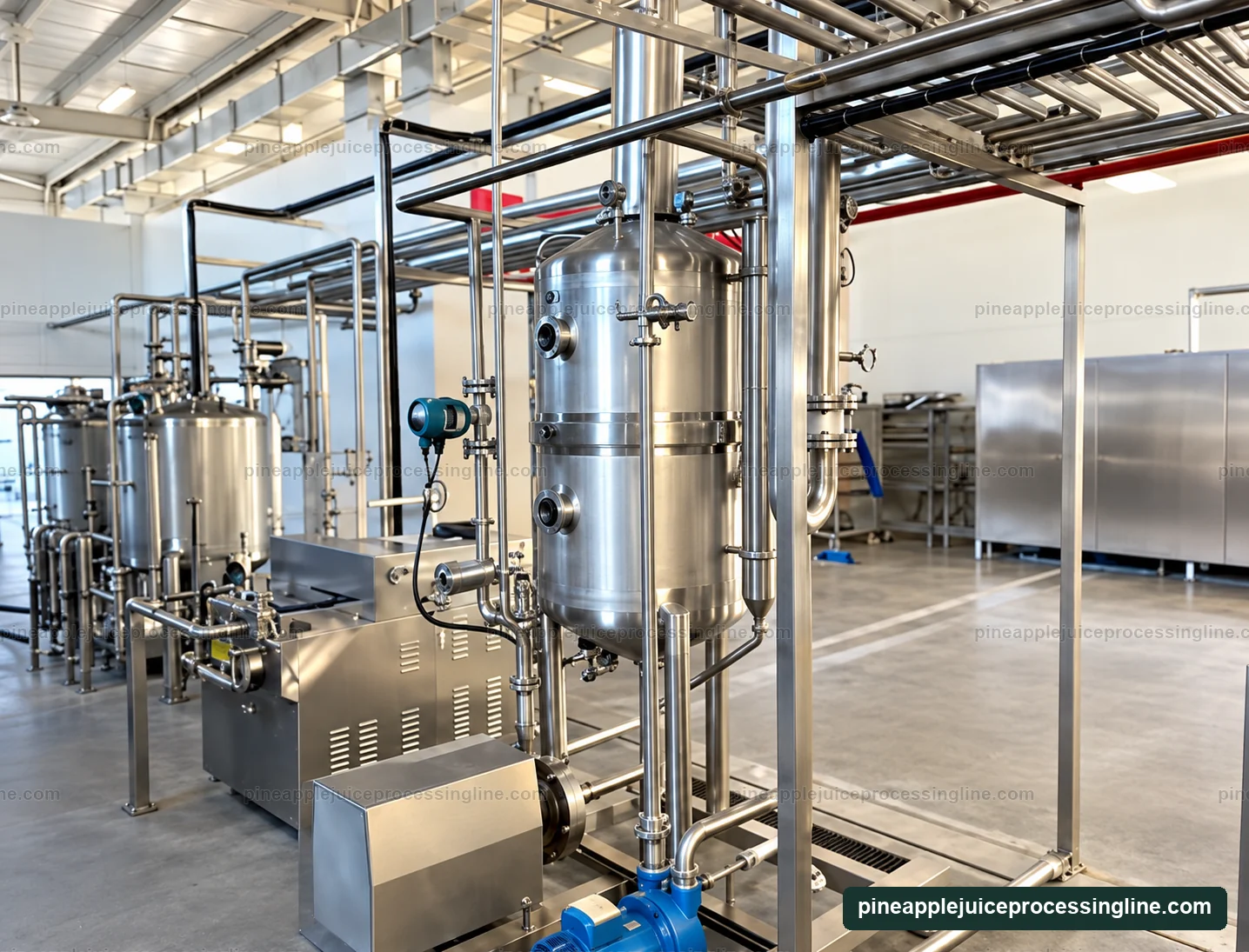
A filter-aid route uses an established filtering layer and a suitable vessel arrangement to retain suspended material. Preparation of the layer, pressure development during the run, removal of retained solids and disposal of spent aid are part of this process. It should not be treated as an interchangeable name for membrane filtration.
Its suitability depends on the product requirement and the complete selected system. The pictured vessel arrangement illustrates the equipment form; feed preparation, aid handling and the operating cycle are specified with the actual application.
Account for what each separation removes
The required juice character leads the choice. Samples, retained-stream accounting and downstream treatment compatibility are more informative than applying the word filtration to all three operations. Water used for flushing or cleaning must remain identifiable in any recovery comparison.
| Route | Main purpose | Streams and operating consequences |
|---|---|---|
| Screen finishing | Control coarse fibre and retained solids | Screened product plus reject material; inspect and clean working screens |
| Tubular ultrafiltration | Fine clarification using a selected membrane | Permeate and retained stream; circulation and membrane-compatible cleaning |
| Filter-aid route | Retain suspended material in a filtering layer | Filtered product and retained solids with spent aid; a defined operating cycle |