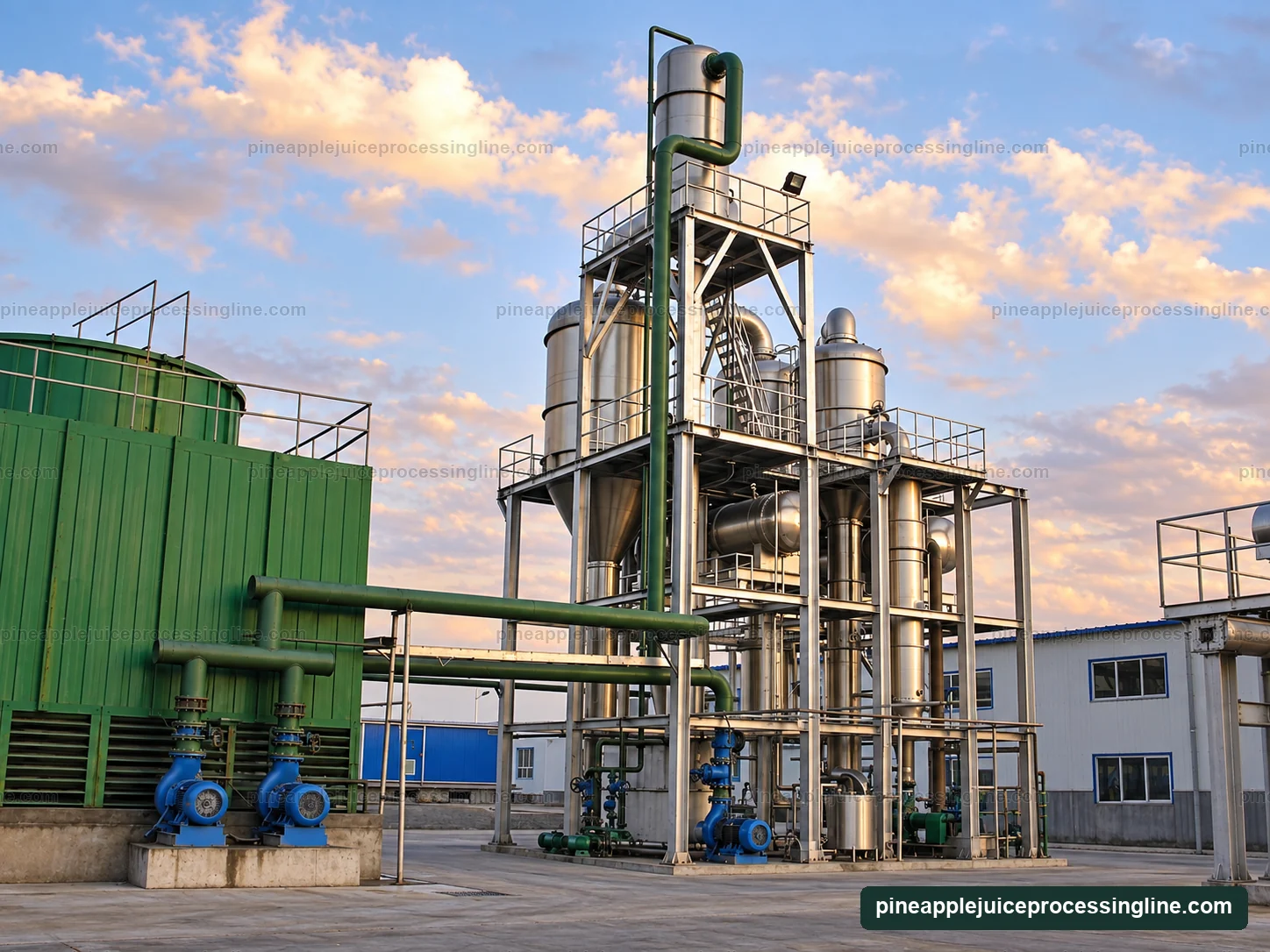
Start with a consistent soluble-solids balance
Let F be feed mass per hour, C concentrate mass per hour, and xF and xC the corresponding soluble-solids mass fractions. If soluble solids are conserved between those two product streams, F × xF = C × xC. Under the additional assumption that the only other mass removed is water, water removal W = F − C.
These relationships are estimates for a defined boundary. Separately removed material, entrainment, sampling, product retained in the equipment and other losses must be included where relevant. A refractometer result used as a proxy for soluble-solids concentration needs a suitable measurement method for the actual juice. Insoluble pulp is characterised separately.
| Quantity | Suitable basis | Used to select |
|---|---|---|
| Feed | Mass rate, inlet concentration and temperature | Feed pump, distribution and upstream buffer |
| Concentrate | Mass rate, final concentration, temperature and flow behaviour | Discharge pump, transfer and downstream treatment |
| Removed water | Mass rate for the defined balance | Evaporation, vapour handling and condensing duty |
The same juice feed rate can create different duties
A lower-solids feed needs more water removed to reach the same final concentration. Pulp loading, entrained air and viscosity can change at the same time, affecting liquid distribution, pumping and fouling. Seasonal feed variation therefore needs a working range for the selected system.
Concentrating juice is not simply running an evaporator until one target reading is reached. Stable operation also requires suitable wetting or circulation, temperature and pressure conditions, discharge control and a cleaning interval that fits production.
Match heat-transfer configuration to the product
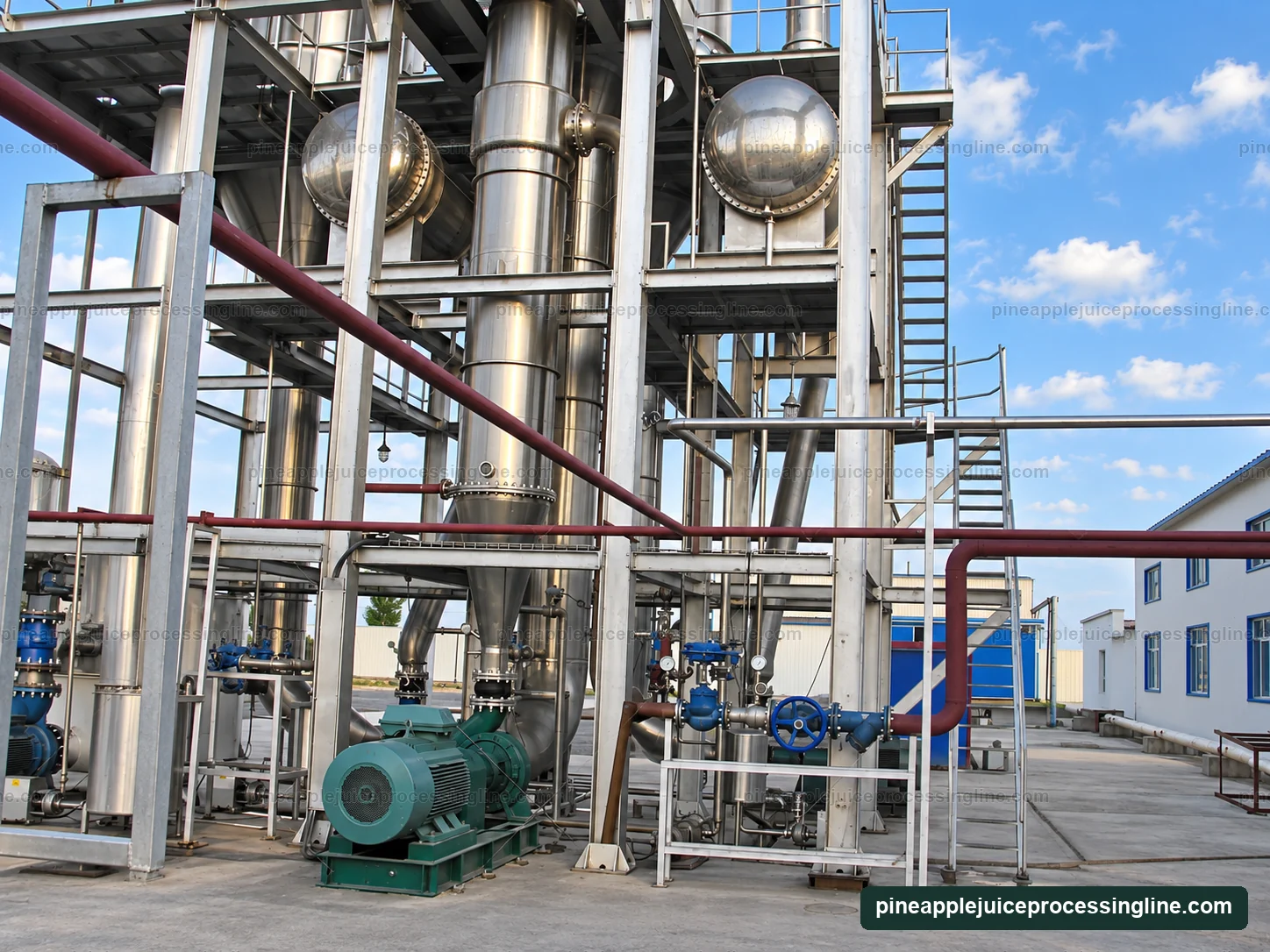
A falling-film arrangement depends on distribution and wetting along the heated surfaces. A forced-circulation arrangement moves product through a heater and separation circuit using a circulation pump. The choice is made around the feed, concentration range and operating behaviour, rather than the expectation that one design suits every pineapple juice.
The selected number of effects and heat-reuse arrangement influence utility consumption, controls and installation space. Heating-medium availability, cooling conditions and condensate routing are part of the selection. An evaporation-capacity figure does not describe the fresh juice input unless its mass balance is also stated.
Carry the concentrate through to the actual package
Concentrate leaves the evaporator with a particular temperature, viscosity and solids condition. The discharge pump, pipe route and any subsequent thermal processing must be selected for that material. An ordinary juice-transfer arrangement may not behave the same way at the final concentration.
The intended bulk package defines the filling interface and the conditions required upstream. Aroma handling and product thermal exposure are considered across the complete route. Final concentration, evaporation conditions and shelf life are separate specifications, not interchangeable guarantees.