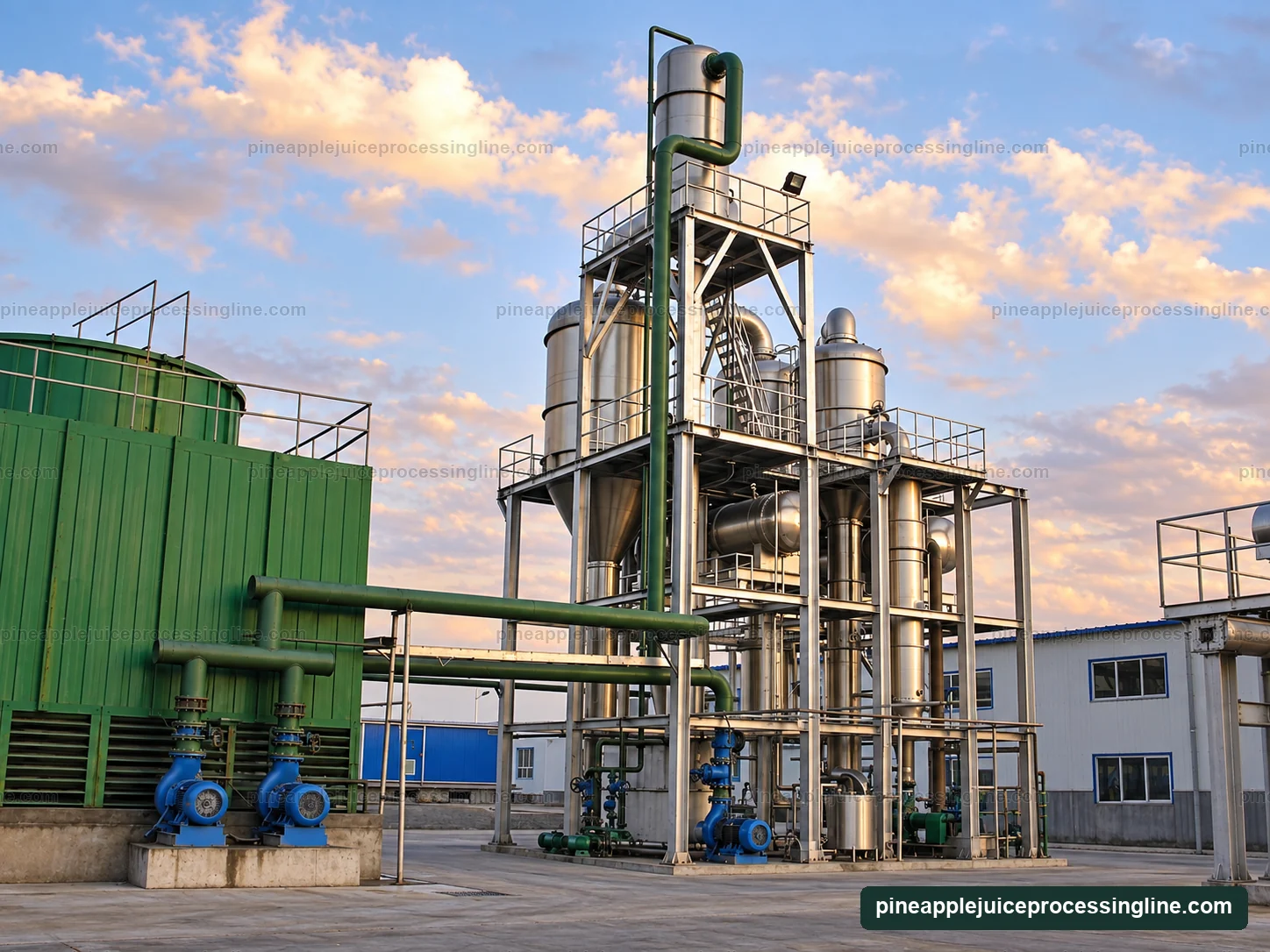
Distribute the juice and separate the generated vapour
A falling-film arrangement distributes liquid over heating surfaces under vacuum. The distribution and operating flow need to maintain the intended film as the product concentration changes. Vapour and liquid are separated, with concentrate continuing on its defined product route.
Pulp loading and viscosity influence the suitable heat-transfer arrangement. Where a duty calls for forced circulation, product is pumped through a heater before evaporation in a separator. Select the configuration from the actual product behaviour rather than assuming all juice uses an identical system.
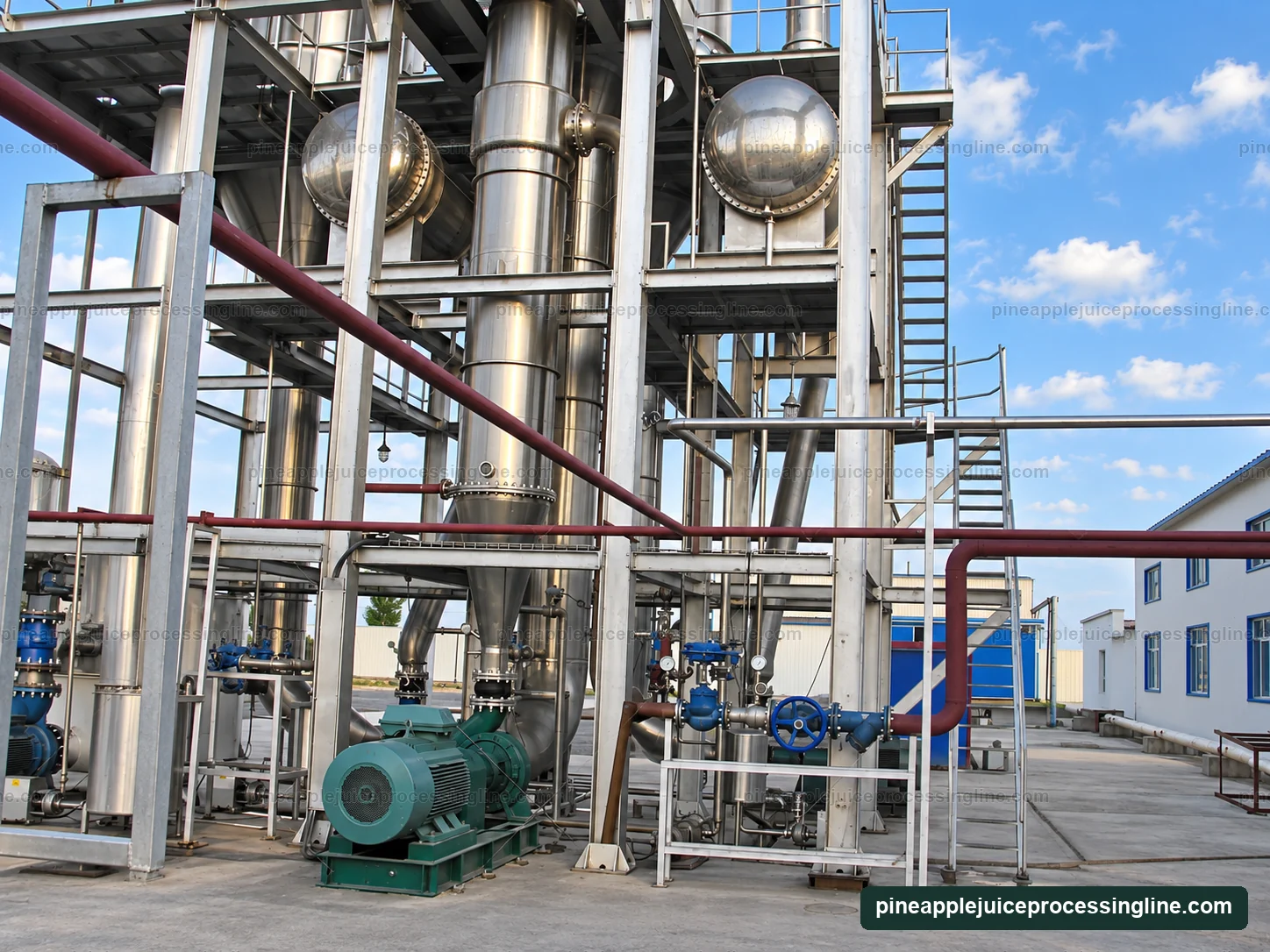
State feed, concentrate and water-removal duties separately
A soluble-solids balance provides an initial relationship between the juice and concentrate flows. Account separately for losses and additional streams when defining the project duty. Volumetric flow also needs the relevant liquid density; fruit intake, juice feed and evaporated water are not interchangeable capacity labels.
| Quantity | Basis for the equipment specification |
|---|---|
| Feed | Prepared juice mass flow, soluble solids and temperature |
| Concentrate | Required outlet solids, product mass flow and handling condition |
| Evaporated water | Water removed on the agreed mass-balance basis |
| Utilities | Heating and condenser duties for the selected arrangement |
| Operating range | Seasonal feed variation and acceptable part-load conditions |
Choose effects and vapour handling against available utilities
Effect count and any selected vapour-recompression arrangement organise the use of heat across the system. Their value depends on the operating duty and the available steam, power and cooling services.
Include the condenser, vacuum equipment, product pumps, circulation requirements and cleaning sequence in the utility schedule. A quoted evaporation figure without inlet and outlet conditions cannot by itself establish plant energy demand.
Keep aroma handling and service access in the same design
Evaporation transfers volatile components with the vapour as well as removing water. Where the ingredient specification calls for aroma recovery, define the collection and return arrangement and evaluate the resulting product. Vacuum operation alone is not a flavour-retention guarantee.
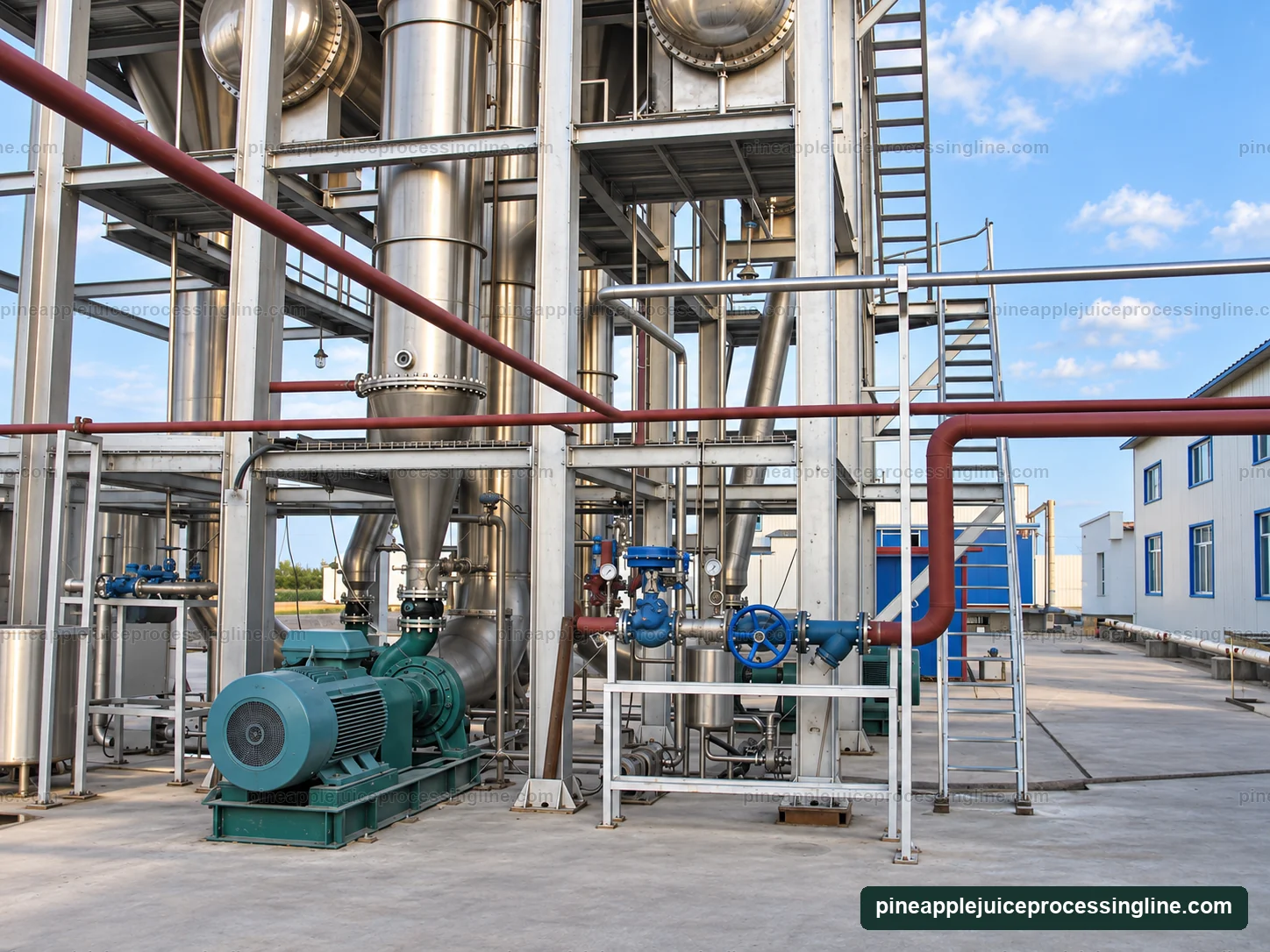
The circulation-pipe view shows why access below and beside the vessels matters. Allow space for pumps, valves, drains and inspection, alongside access to the heating and separation equipment.
Recheck the equipment after concentration
The concentrate can differ substantially from the feed in viscosity and volumetric flow. Match its outlet transfer, thermal treatment and filler duty to that condition, including startup and stop handling.
Concentration is one processing stage. The final product treatment, packaging and storage specification establish preservation requirements independently of the amount of water removed.
At this stage
Practical questions
Is a fixed outlet Brix suitable for every pineapple concentrate?
The intended ingredient specification determines the target. The evaporator duty then follows the actual feed solids, required output and product behaviour, rather than a universal concentration number.