Reduce unnecessary air entry before treating it
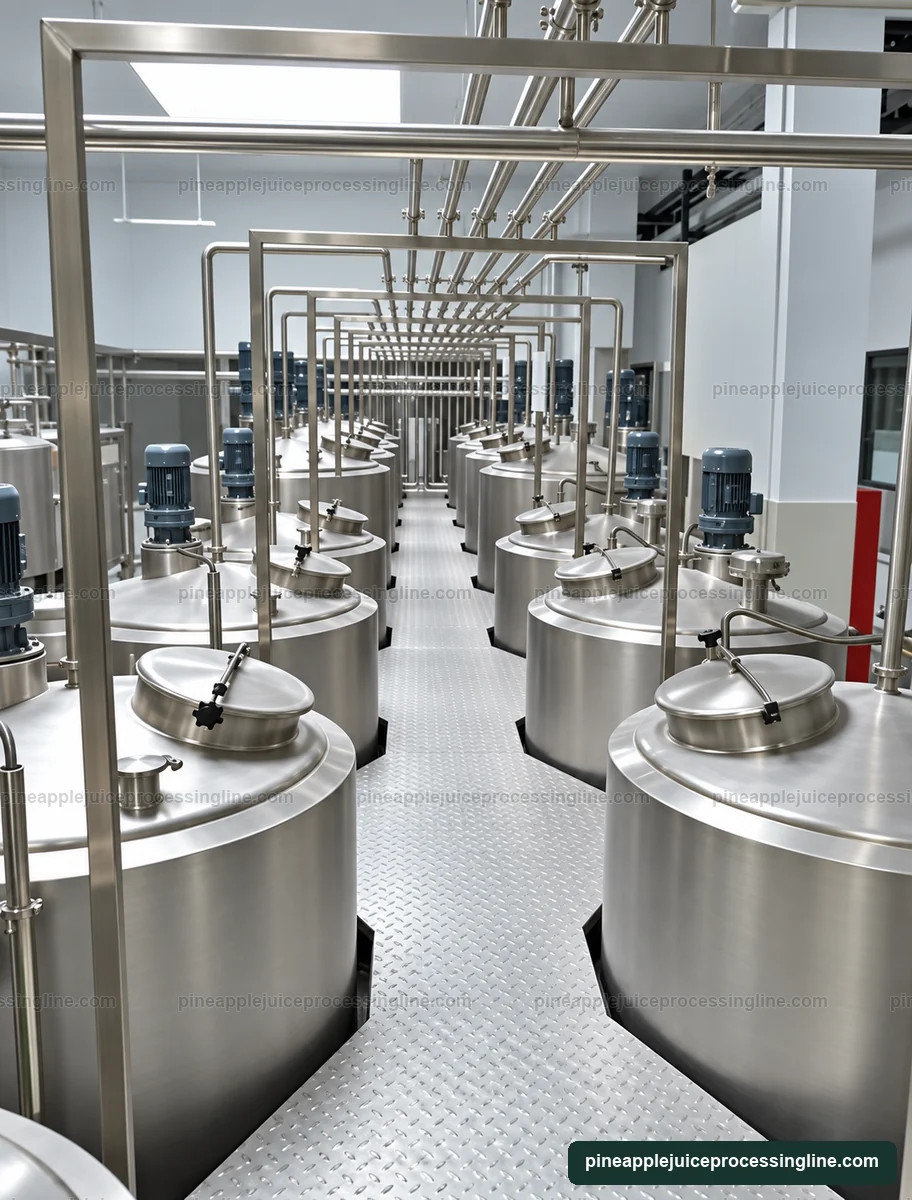
A large free fall into a receiving vessel, an inadequately supplied pump or a leaking suction connection can introduce or entrain air. Foam and an intermittent supply can then complicate flow measurement, pumping and downstream processing. These conditions are first addressed at the collection and transfer arrangement.
Buffer levels, product return positions and pump operation should suit the actual juice stream. A deaerator should not be used as a substitute for repairing an avoidable air-entry problem or for giving a pump a stable supply.
Deaeration depends on the liquid and the operating condition
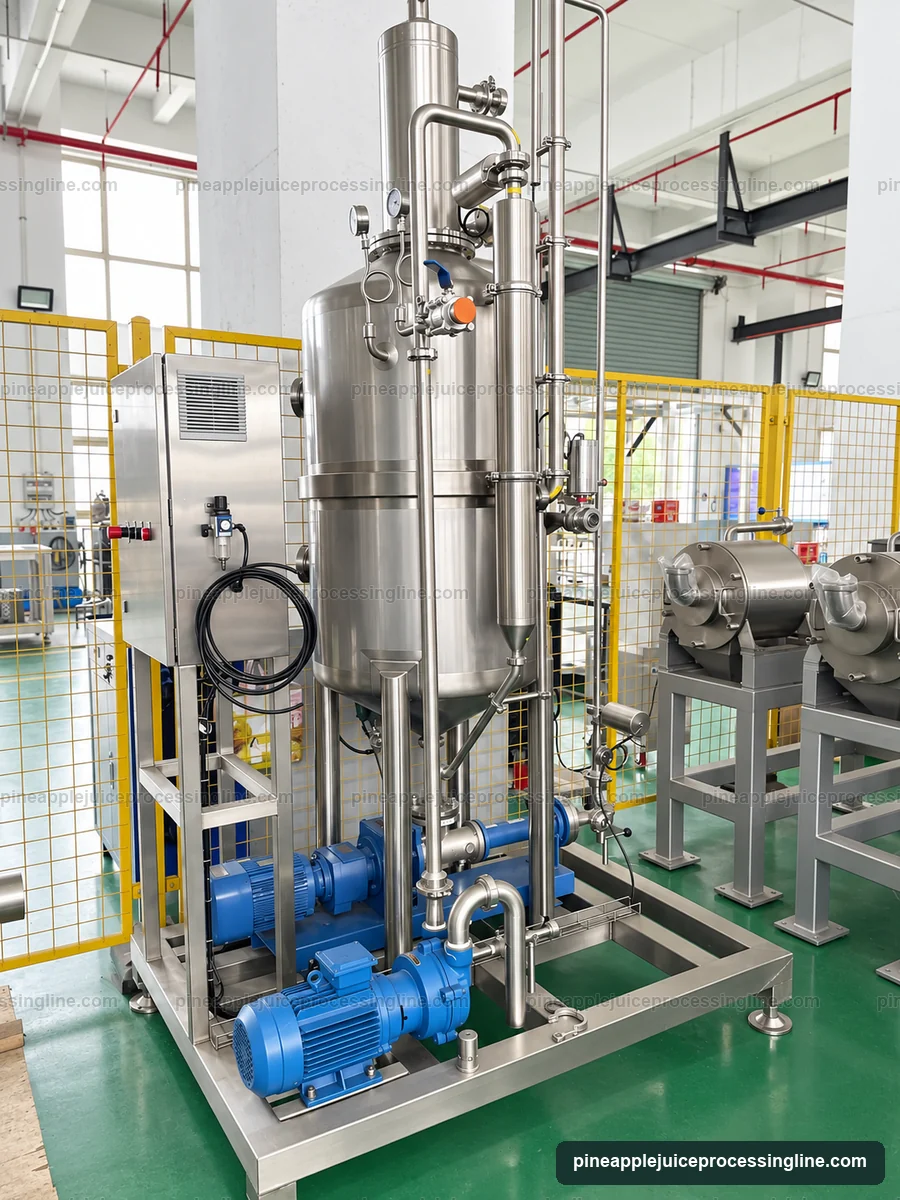
Vacuum deaeration exposes juice to reduced pressure in a configured vessel so gases can leave the liquid. The inlet distribution, residence behaviour, product temperature, vacuum arrangement and outlet pump all influence performance. Viscosity, pulp and foaming behaviour affect how the liquid moves through that system.
A useful acceptance measurement states the feed and outlet conditions and the method used to assess gas removal. The equipment name does not imply zero dissolved oxygen. If a volatile-product recovery arrangement is included, its handling and return path are specified as part of that configuration.
Vacuum and aroma retention are not the same outcome
Evaporation under vacuum can reduce the boiling temperature relative to operation at atmospheric pressure, but volatile compounds may still travel with the vapour. The product result depends on the exposure, vapour handling and any selected aroma-recovery arrangement.
Aroma assessment compares the relevant feed, product and recovered streams under stated conditions. It should accompany the concentration and thermal design when flavour is a key product requirement. Lower operating temperature alone is not evidence that every aroma component remains in the concentrate.
Connect thermal treatment to the intended product and pack
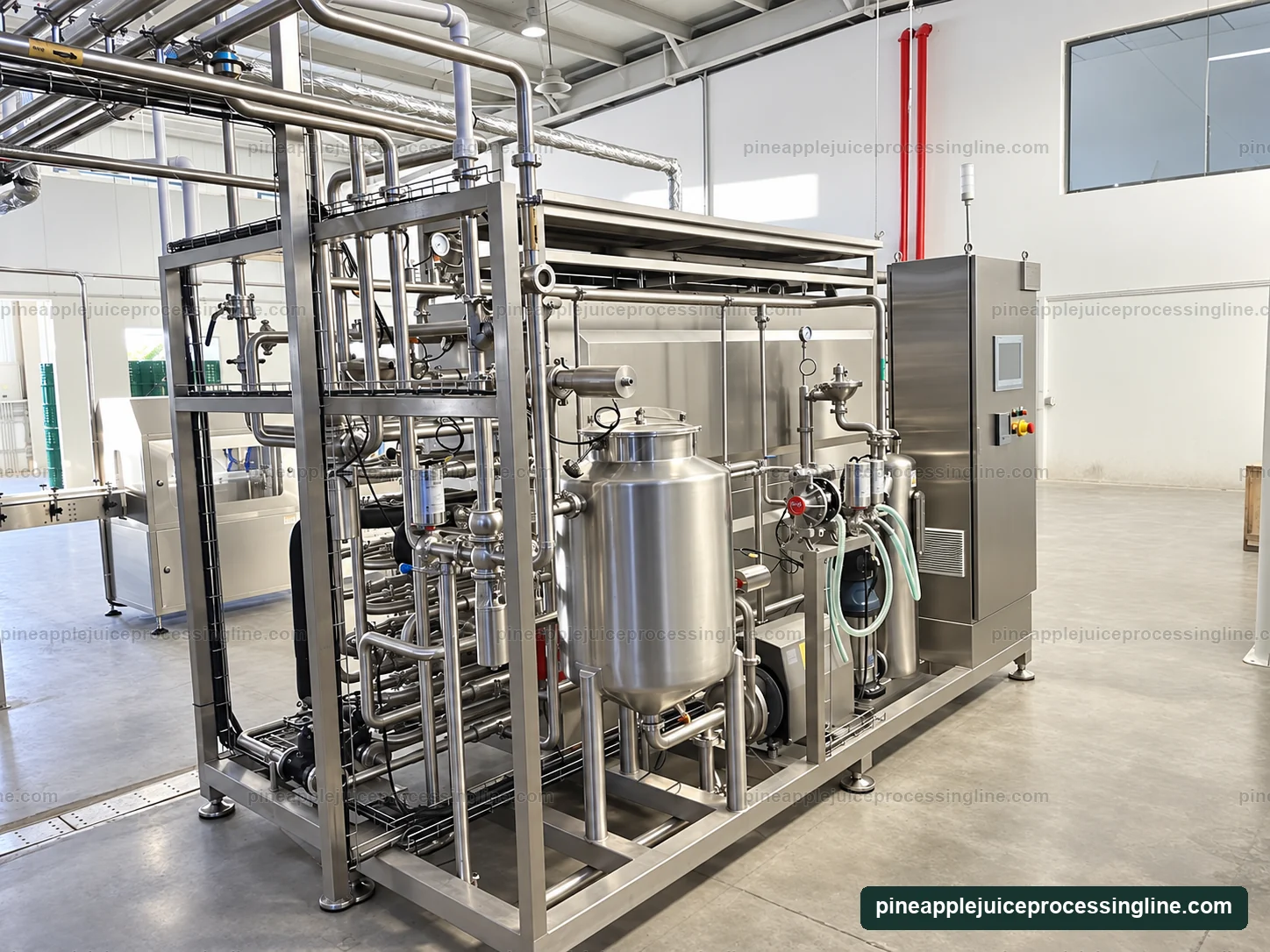
The tubular processing section supplies controlled heating, holding and cooling functions in the selected configuration. Product flow, composition, solids and the required process determine the working conditions. Published hardware-family temperature ranges are not a pineapple juice recipe.
For aseptic bulk filling, the process includes the sterile product route and its connection to the filling head and bag fitment. Ordinary buffering, a warm product outlet or a clean-looking bag is not a substitute for that system. Product validation and the selected packaging conditions establish the preservation requirements.