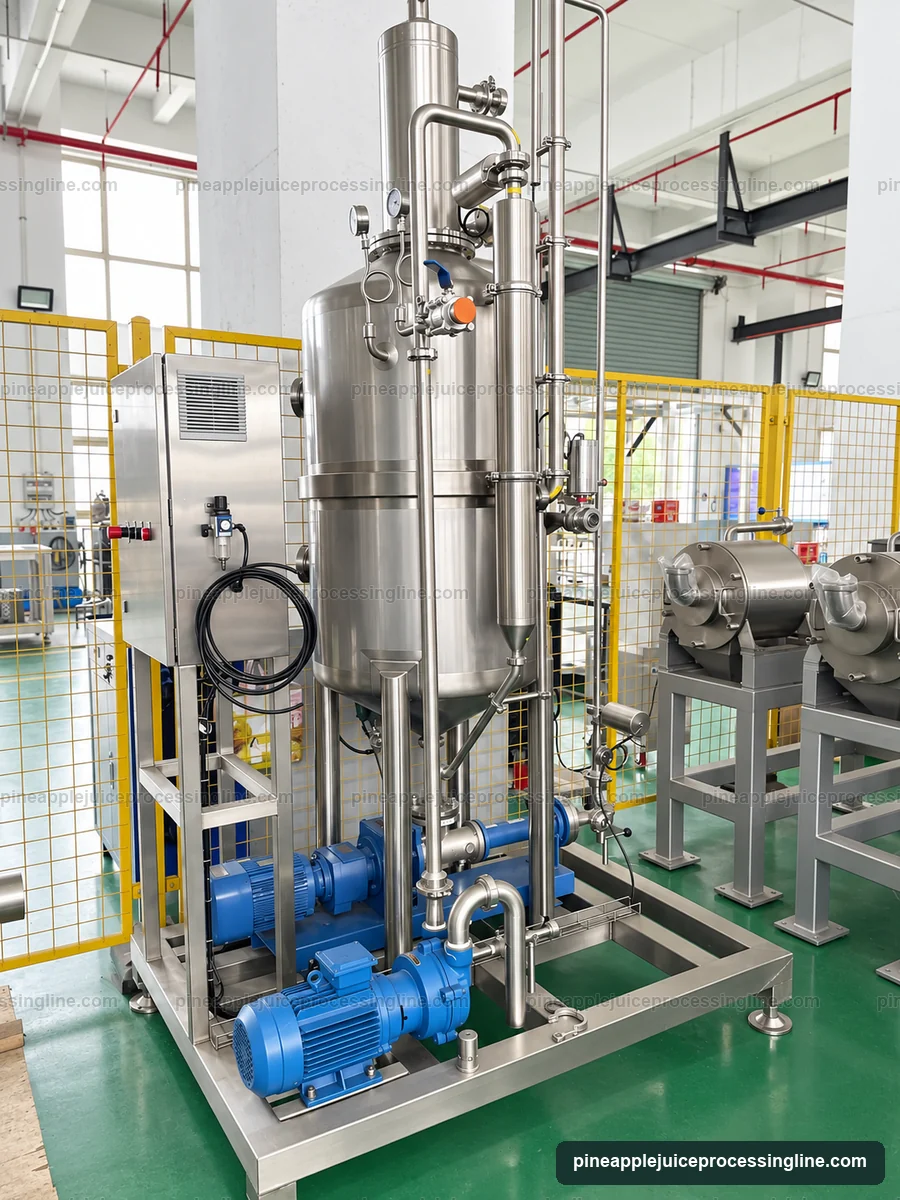
Coordinate gas release with a stable liquid outlet
Under reduced pressure, gas leaves the liquid in the vessel and enters the vacuum circuit. The product discharge must maintain the required liquid flow without losing the intended vessel operating condition.
Assess the pineapple juice at its actual temperature and pulp level. Foam behaviour, product viscosity and feed variation affect the selected duty. Reducing avoidable air entry at upstream transfers remains useful even when a deaerator is included.
TQJ family upper liquid-rate references
The table is a generic model-family reference. The selected liquid, pumps and vacuum configuration establish the usable operating range and gas-removal result. An upper rate does not specify a minimum stable flow or guarantee the same result for every juice condition.
| Model | Catalogue upper liquid rate | Listed power | Reference dimensions |
|---|---|---|---|
| TQJ-5000 | 5000 L/h | 2.2 + 2.2 kW | 1000 × 1200 × 2900 mm |
| TQJ-10000 | 10000 L/h | 2.2 + 3.0 kW | 1200 × 1500 × 2900 mm |
Set the vacuum duty alongside product quality
Specify the intended air-removal outcome together with the acceptable changes in aroma and foaming. The product evaluation should compare the inlet and outlet under the agreed operating conditions.
The condenser and condensate destination belong in the vacuum-system specification. If aroma collection or recovery is required, its equipment and return route should be expressly included. Deaeration does not mean complete removal of every gas or unchanged aroma.
Arrange the package for operation and cleaning
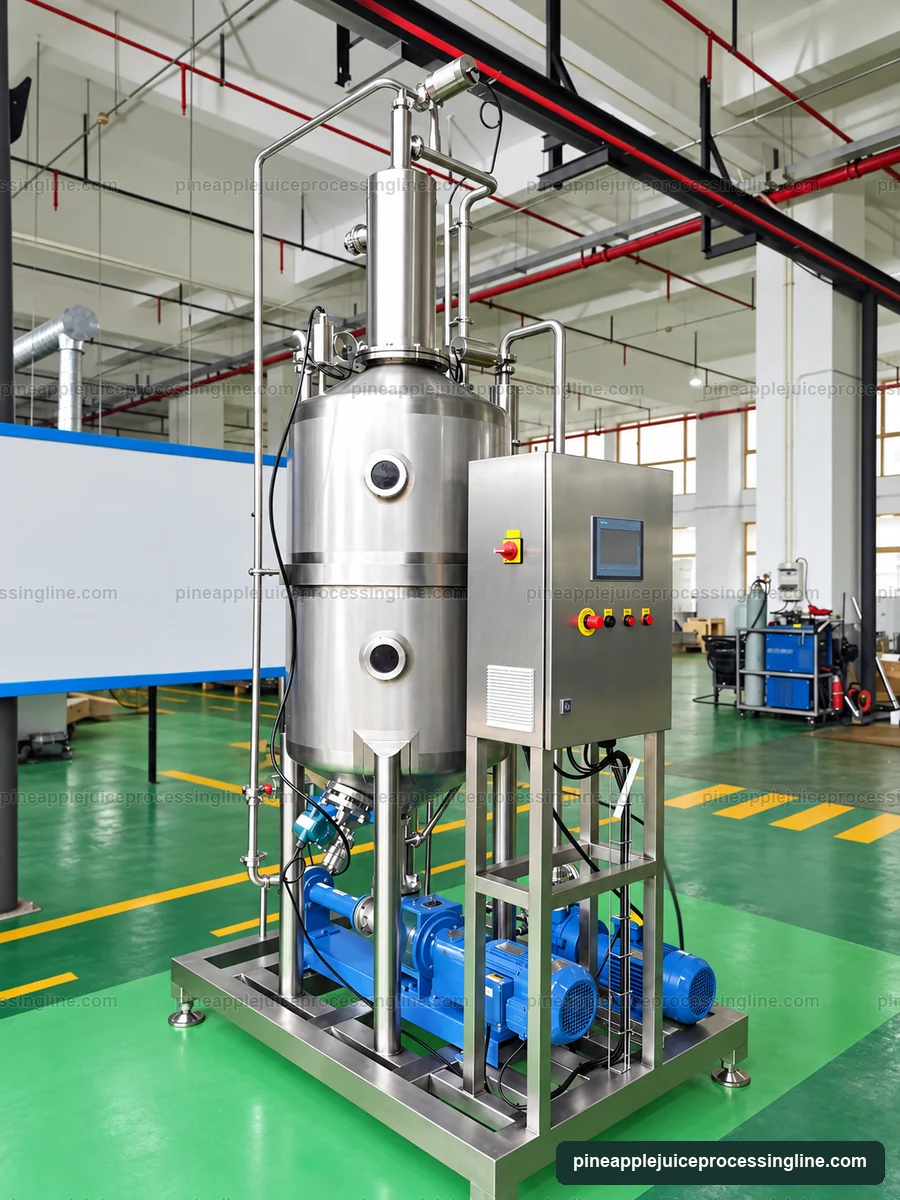
Vessel ports, pump location and cabinet placement vary by configuration. Use the selected arrangement to establish product connections, access to instruments, service clearance and the vacuum utilities.
Include the liquid-contact chamber and transfer circuit in the cleaning procedure, with appropriate isolation of the vacuum side. Drainage and restart should restore the intended operating condition before product feed resumes.
At this stage
Practical questions
Should a deaerator be added to every juice route?
Use it where the actual air, foam or downstream process requirements justify the operation. Evaluate its product and aroma effects under the selected temperature, flow and vacuum conditions.