Define the juice that reaches the evaporator
State the juice flow, inlet soluble solids, temperature and pulp condition. If a new extraction section is included, its recovered juice stream becomes this feed basis. Incoming fruit tonnage is not the same sizing quantity.
The inlet and target concentration determine the water to be removed. Review that balance alongside available heating, cooling and vacuum services, and the production schedule.
Choose the concentration arrangement for product behaviour
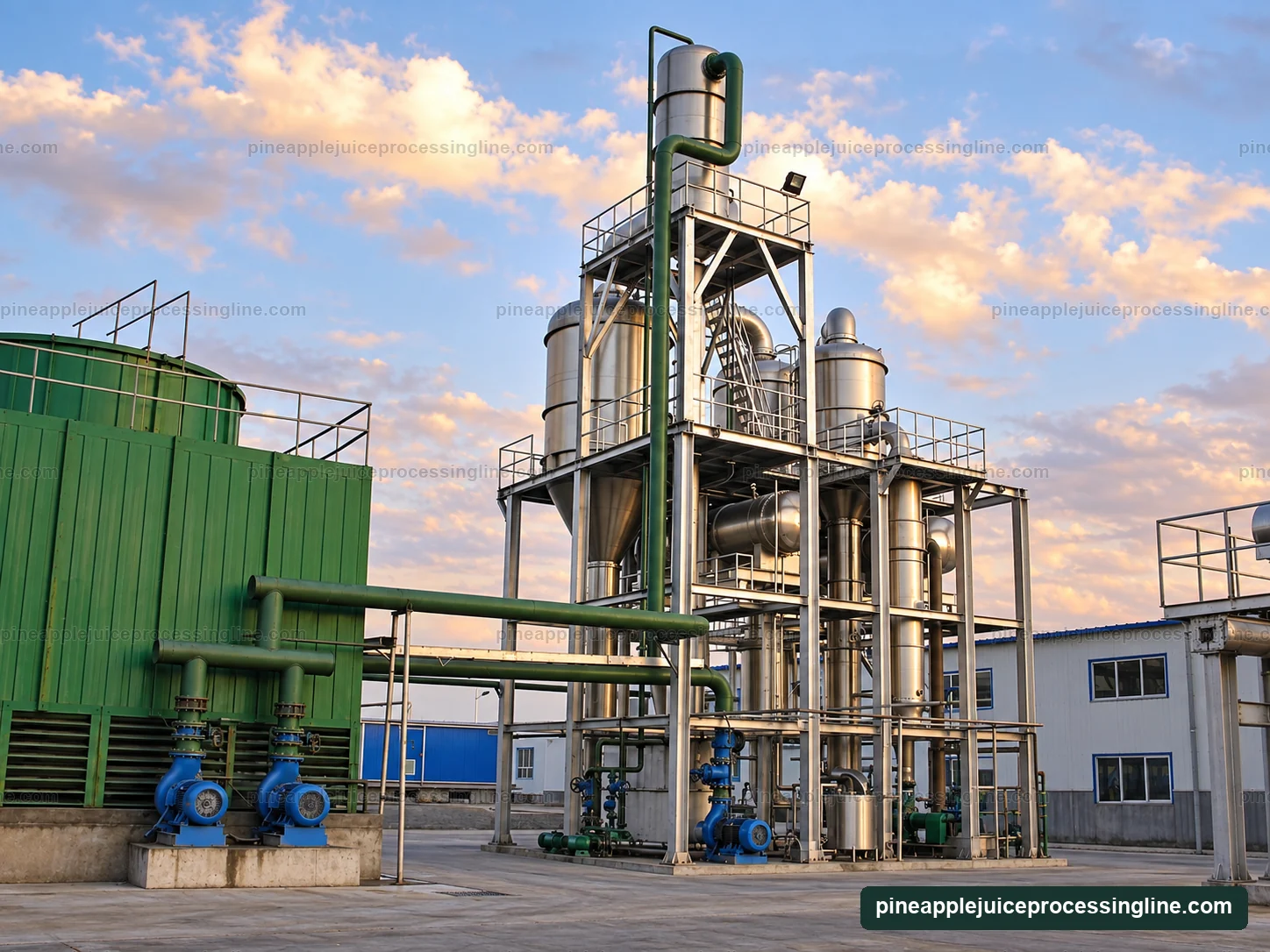
The evaporation arrangement must accommodate the selected juice composition, fouling behaviour and intended concentrate condition. Heating surfaces, liquid circulation, vapour handling and cleaning access belong in the same equipment discussion.
Higher solids change the transfer duty. Match concentrate outlets, buffer vessels and product pumps to the actual operating condition rather than reusing the juice-feed specification unchanged.
Include the filling route in the concentrate specification
Decide how the concentrate will be treated, buffered and packed. Aseptic bag filling needs a compatible sterile product supply and controlled interface to the bag fitment; it is not simply an extra outlet on an evaporator.
An initial enquiry should distinguish a concentration section added to an existing juice operation from a complete fruit-to-concentrate supply. This makes the preparation, extraction and utility boundaries clear.
At this stage
Practical questions
Does a concentrate line always include fruit washing and pressing?
No. A concentration section can start from an existing juice supply. A complete fruit-to-concentrate scope separately includes the matched preparation and extraction equipment.
Can you size an evaporator from fruit intake alone?
No. Define recovered juice flow, inlet and target solids, and the water-removal duty. These differ from incoming fruit mass.