Define the material that is being measured
State the incoming fruit condition and which fractions enter extraction. Whole-fruit intake, accepted prepared material and crushed press feed are different measurement boundaries.
Record the preparation steps and feed behaviour during the trial. A result measured from prepared flesh cannot be compared directly with a result expressed against whole-fruit intake without accounting for the other streams.
Measure separated streams under stated conditions
Record prepared feed, recovered juice and discharged pomace over a defined run. Identify any accumulation, transfer loss or sampling interruption that affects the material balance.
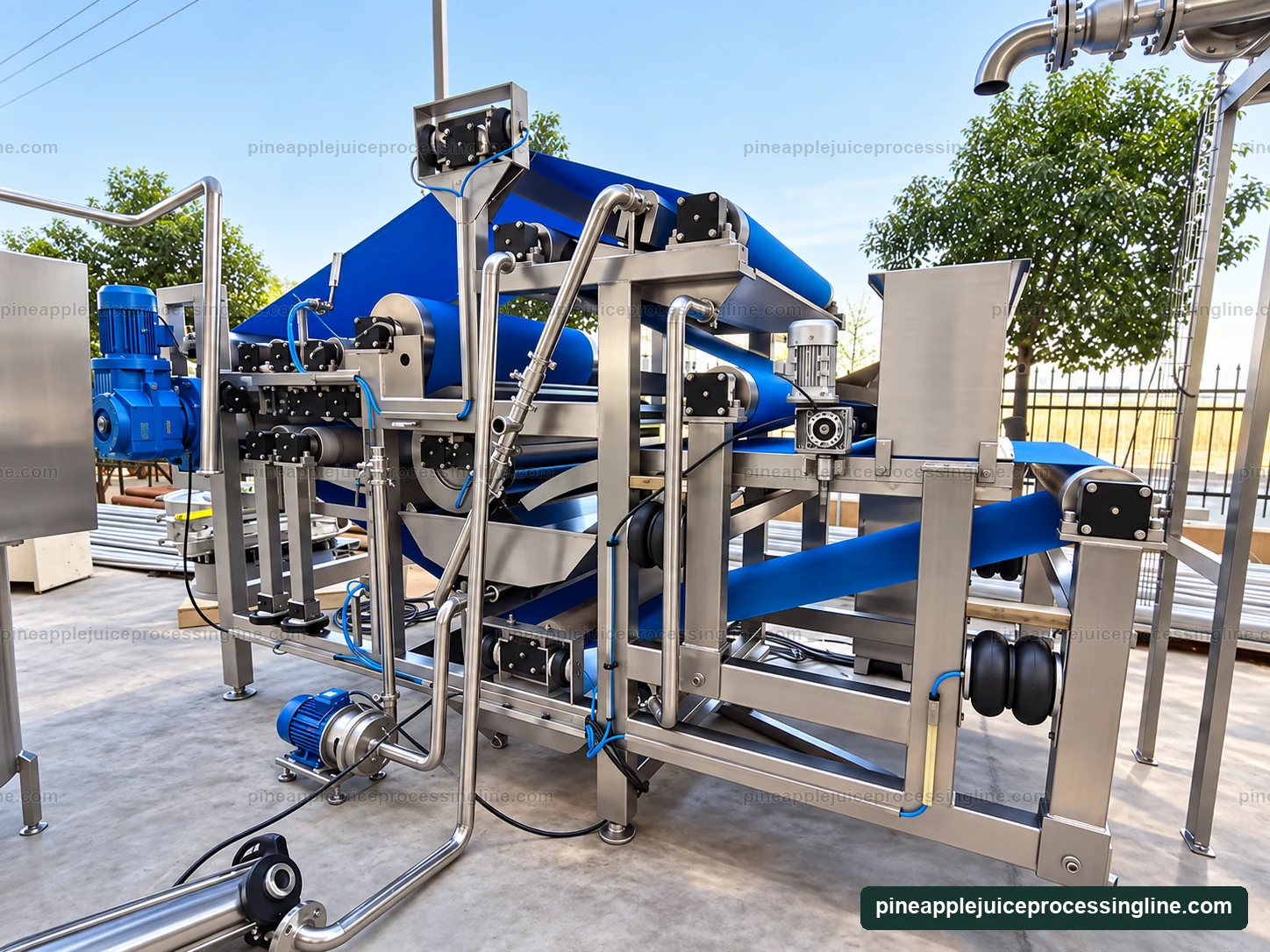
Juice composition, pomace condition and practical feed loading also help explain the result. Do not treat a generic fruit-capacity value or a machine photograph as a measured pineapple recovery figure.
- Material boundary and preparation route
- Feed and recovered product quantities
- Pomace and other separated streams
- Operating conditions and any unaccounted material
Use the trial to discuss equipment and operating requirements
Relate the measured stream to the downstream finishing, buffering and treatment duties. Include the waste-removal route and cleaning requirements alongside juice recovery.
An enquiry can describe the target product and available trial observations without a fixed yield promise. Product-specific performance should be assessed with representative material and agreed acceptance conditions.
At this stage
Practical questions
Can a fixed pineapple juice yield be promised from the catalogue?
A generic catalogue value does not establish pineapple-specific recovery. Representative material, the preparation boundary and trial conditions are needed.
What is the most important detail when comparing trial results?
Use the same stated material boundary and account for the separated streams. Otherwise the percentages can describe different quantities.